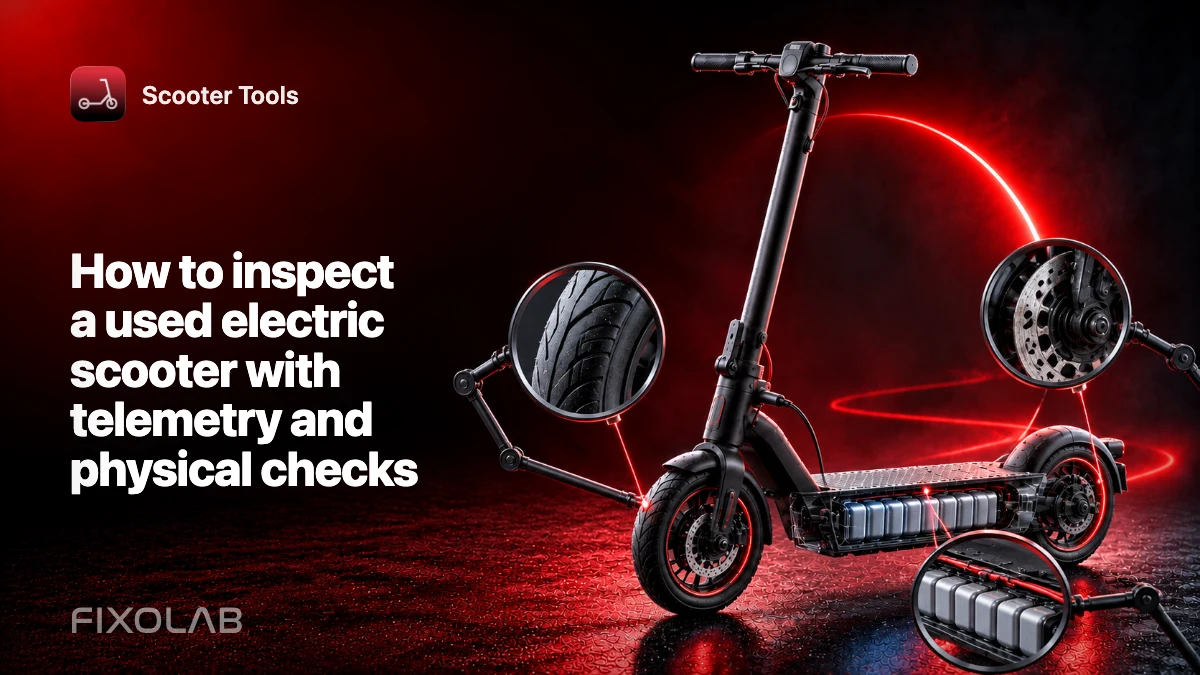
How to inspect a used electric scooter with telemetry and physical checks
Telemetry can add context when evaluating a used scooter, but it cannot prove ownership, detect a cracked frame hidden by a cover or guarantee remaining battery life. A safe inspection combines documents, physical condition, approved test riding and the data the exact model exposes.
Do not attempt to bypass account binding, locks or firmware protections. The seller must resolve ownership and transfer through legitimate channels.

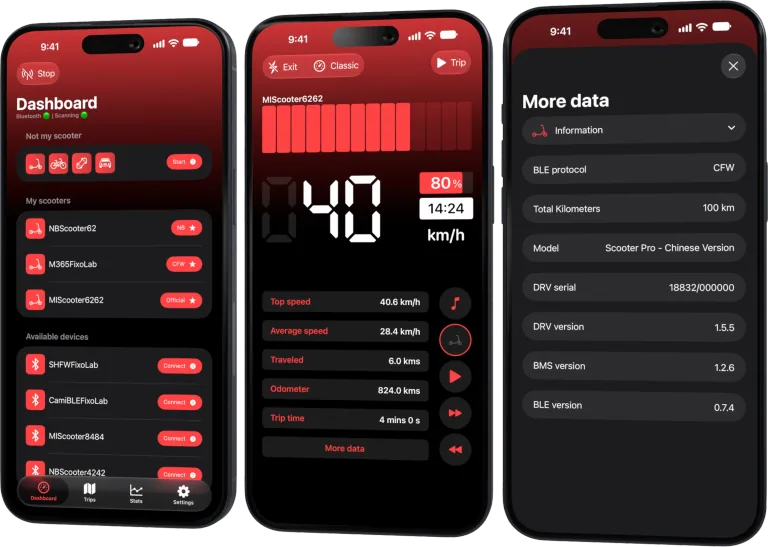
Your Xiaomi and Ninebot scooter dashboard
Monitor speed, battery, mileage, temperature and routes in real time, with support for official and custom firmware
Available on Android, iPhone, iPad and Mac, with iCloud sync on Apple devices
Verify identity and ownership
Match the exact model and regional variant to the seller’s description. Request legitimate proof of purchase where appropriate and check serial information privately. Confirm that the scooter can be transferred from the previous owner’s official account.
Walk away from altered serials, unexplained binding problems or a request to use stolen credentials.
Inspect the structure
With the scooter off, look for cracks, bent parts, corrosion, missing fasteners and play in the stem or folding joint. Inspect the deck and battery enclosure for deformation. Check that modifications have not cut, pinched or exposed wiring.
Cosmetic scratches are different from a structural impact. If uncertain, use a qualified shop.
Tires and brakes
Check tire construction, approved size, tread, pressure where applicable, sidewalls and rims. Inspect the mechanical brake type, wear, lever feel, leaks and disc or drum condition.
The first braking test belongs at walking speed in a safe area, not on a road descent.
Battery and charger
Confirm the charger is approved for the exact model and undamaged. Do not charge a swollen, wet, hot, damaged or strong-smelling battery.
Ask about storage history, exposure to water and battery replacement. A displayed 100% says nothing about full usable capacity or cell safety.
Read compatible telemetry
With permission and a supported connection, Scooter Tools may show battery, mileage, firmware family, temperature and other model-dependent values. Compare them with the scooter display and documentation.
Look for internal consistency rather than a magic threshold. A low odometer does not override heavy physical wear, and a normal temperature during a short test does not certify the pack.
Test ride
Only ride after the stationary inspection passes, ownership is clear and local rules allow it. Test low-speed steering, acceleration and braking. Listen for rubbing or vibration and observe whether power delivery and battery indication remain stable.
Do not use public traffic to test maximum speed, full-range depletion or a suspected fault.
Keep the report private
Store serial, receipt and transfer records securely. If asking for advice, redact serial numbers, seller identity, home location, pairing data and exact route.
Review what Scooter Tools does and does not do before treating the app as an inspection instrument.
Frequently asked questions
Can odometer mileage prove the condition?
No. Wear, storage, impacts and service history matter, and the displayed value needs model-specific interpretation.
Can Scooter Tools unlock a bound scooter?
It should not be used to bypass ownership or security. The legitimate owner and manufacturer flow must resolve binding.
Can a short test measure battery health?
It may reveal obvious faults, but it cannot quantify full capacity or inspect cells.
What is the biggest reason to walk away?
Unclear ownership, structural damage, battery warning signs or brakes that cannot be verified safely.
Your Xiaomi and Ninebot scooter dashboard
Monitor speed, battery, mileage, temperature and routes in real time, with support for official and custom firmware
Available on Android, iPhone, iPad and Mac, with iCloud sync on Apple devices
| FixoLab
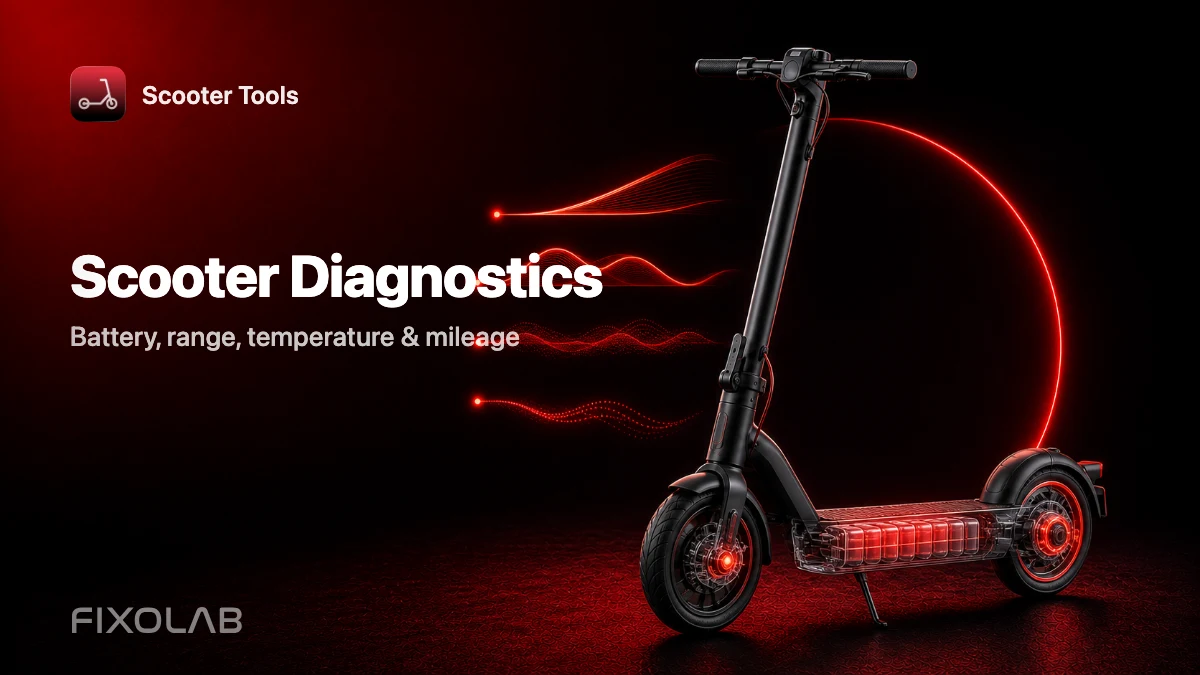
Reading Battery, Range, Temperature and Mileage in Scooter Tools
How Scooter Tools reads battery percentage, estimated range, temperature and mileage directly from your scooter's BMS over Bluetooth and shows them on your live dashboard.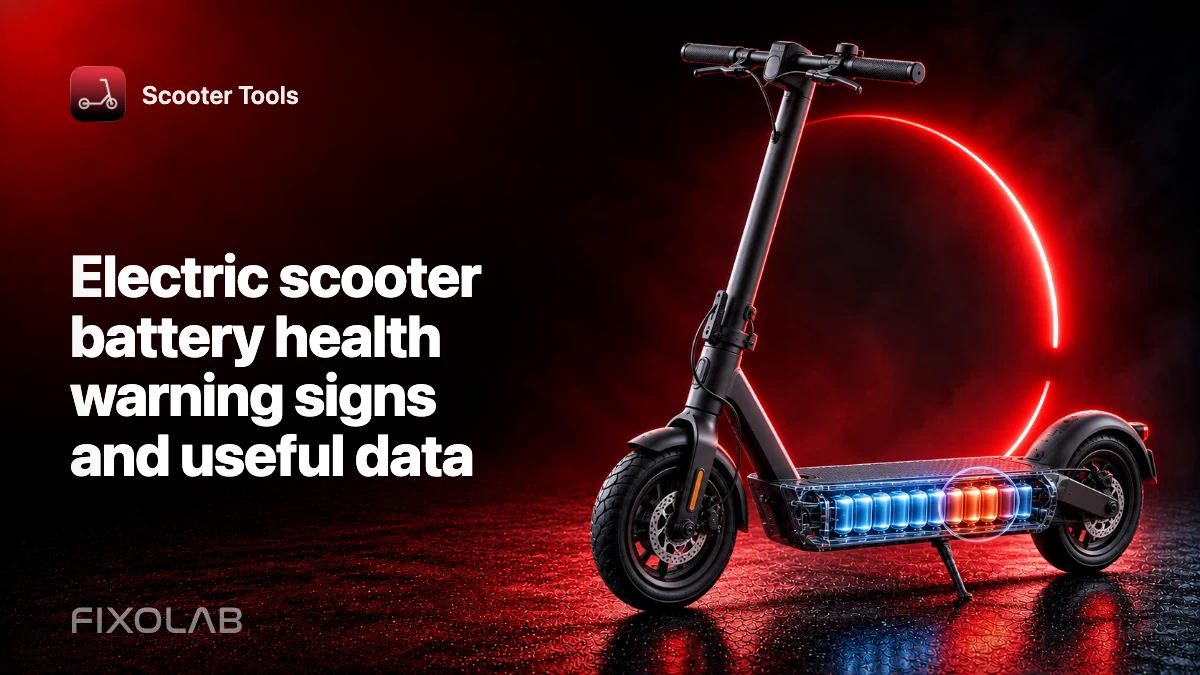
| FixoLab
Electric scooter battery health warning signs and useful data
Separate normal range variation from possible electric scooter battery trouble using repeatable rides, available telemetry and physical warning signs.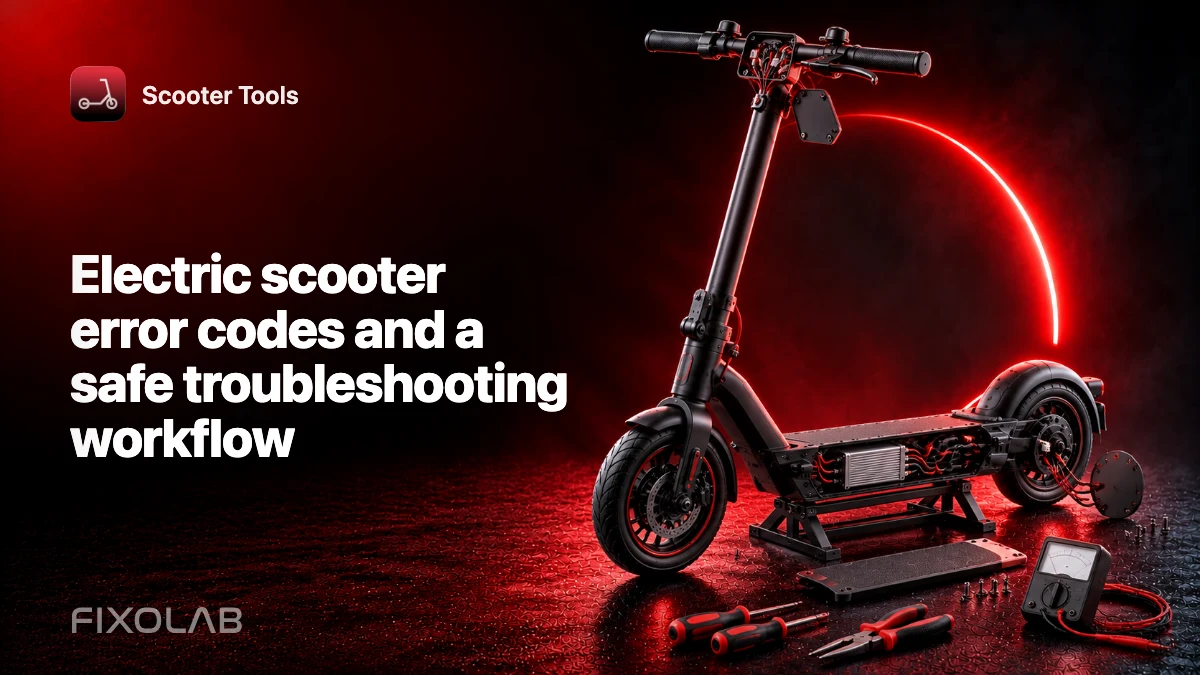
| FixoLab
Electric scooter error codes and a safe troubleshooting workflow
Respond to an electric scooter error without guessing: preserve the exact code, check the model manual, inspect safely and avoid repeated resets that hide a fault.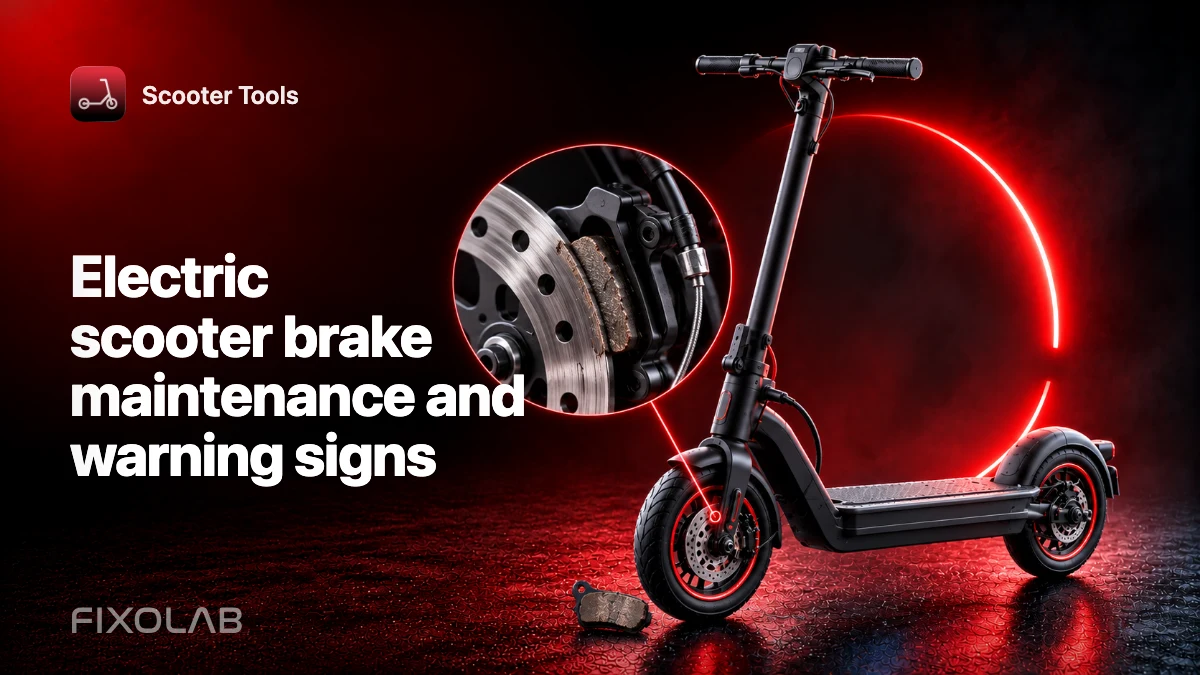
| FixoLab
Electric scooter brake maintenance and warning signs
Recognize brake wear, changing lever feel and unsafe stopping behavior on an electric scooter, with a practical inspection and service checklist.