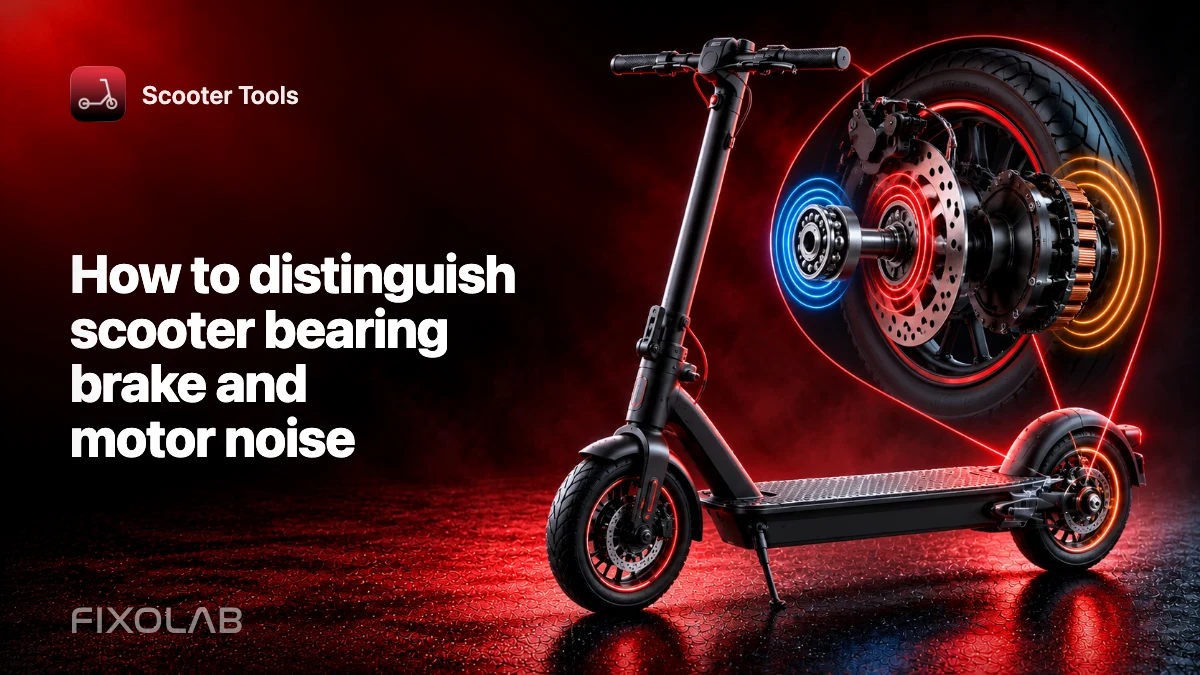
How to distinguish scooter bearing brake and motor noise
A new sound can come from a rotating bearing, brake contact, tire, fender or motor. The goal is to describe it without creating a dangerous test.
Scooter Tools can show supported local Bluetooth telemetry and trip context. It does not flash firmware, bypass ownership, certify a repair or replace the scooter manufacturer’s safety instructions.

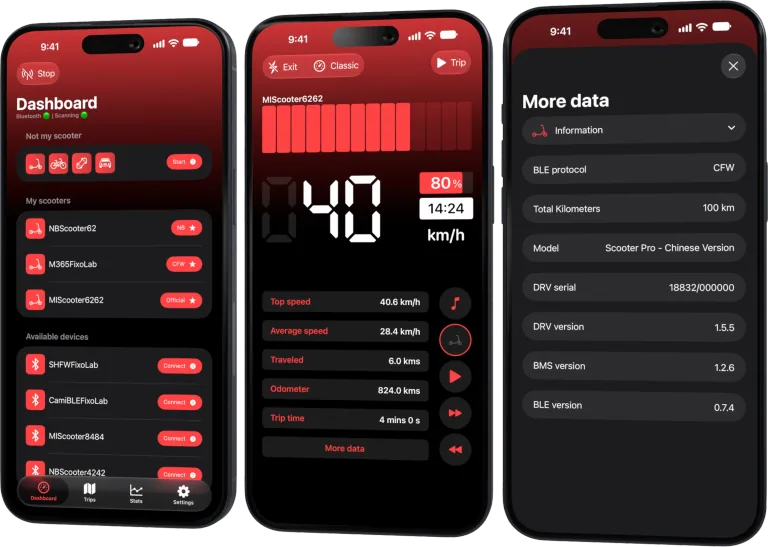
Your Xiaomi and Ninebot scooter dashboard
Monitor speed, battery, mileage, temperature and routes in real time, with support for official and custom firmware
Available on Android, iPhone, iPad and Mac, with iCloud sync on Apple devices
Start with a visual inspection
Power off the scooter and check for debris, rubbing cables, loose fenders, tire damage and obvious brake contact using the manual’s approved access.
Relate sound to wheel rotation
A repeating sound once per wheel turn suggests a rotating source. Continuous scraping may point to brake or guard contact, but do not place hands near moving parts.
Relate sound to power
A sound that appears only under motor load provides different evidence from one present while coasting or spinning a lifted wheel. Do not use high speed on a stand.
Record safe evidence
Note speed, braking, load, temperature and whether vibration is present. A short recording can help service, but stop riding for grinding, binding, overheating or braking changes.
Safe review checklist
- Inspect with power off.
- Keep body parts clear of wheels.
- Use only a slow safe observation.
- Stop for braking or heat symptoms.
Frequently asked questions
Can Scooter Tools identify a noise from telemetry?
No. Telemetry can add speed and temperature context but cannot locate a mechanical sound.
Is motor whine normal?
Some electrical sound can be normal, but a new or changing noise needs model-specific assessment.
Should I keep riding to make the recording clearer?
No if control, braking, heat or structural integrity is affected.
Your Xiaomi and Ninebot scooter dashboard
Monitor speed, battery, mileage, temperature and routes in real time, with support for official and custom firmware
Available on Android, iPhone, iPad and Mac, with iCloud sync on Apple devices
| FixoLab
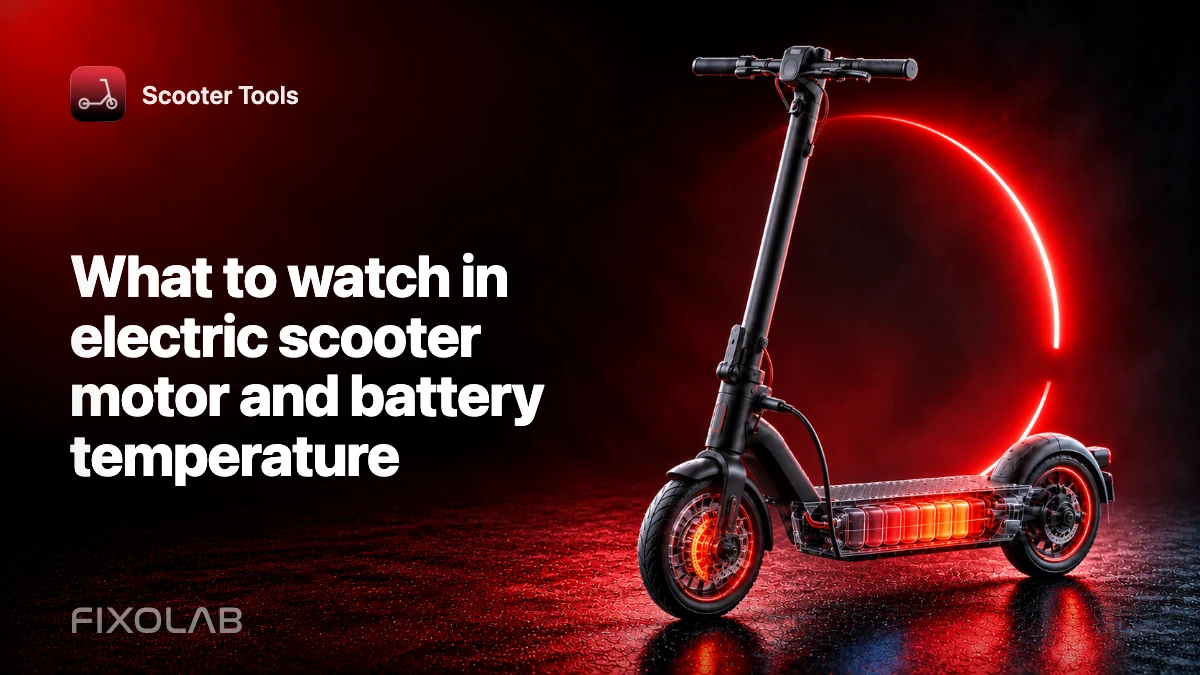
What to watch in electric scooter motor and battery temperature
Interpret available scooter temperature data in context, recognize thermal warning signs and avoid using one sensor value as a complete diagnosis.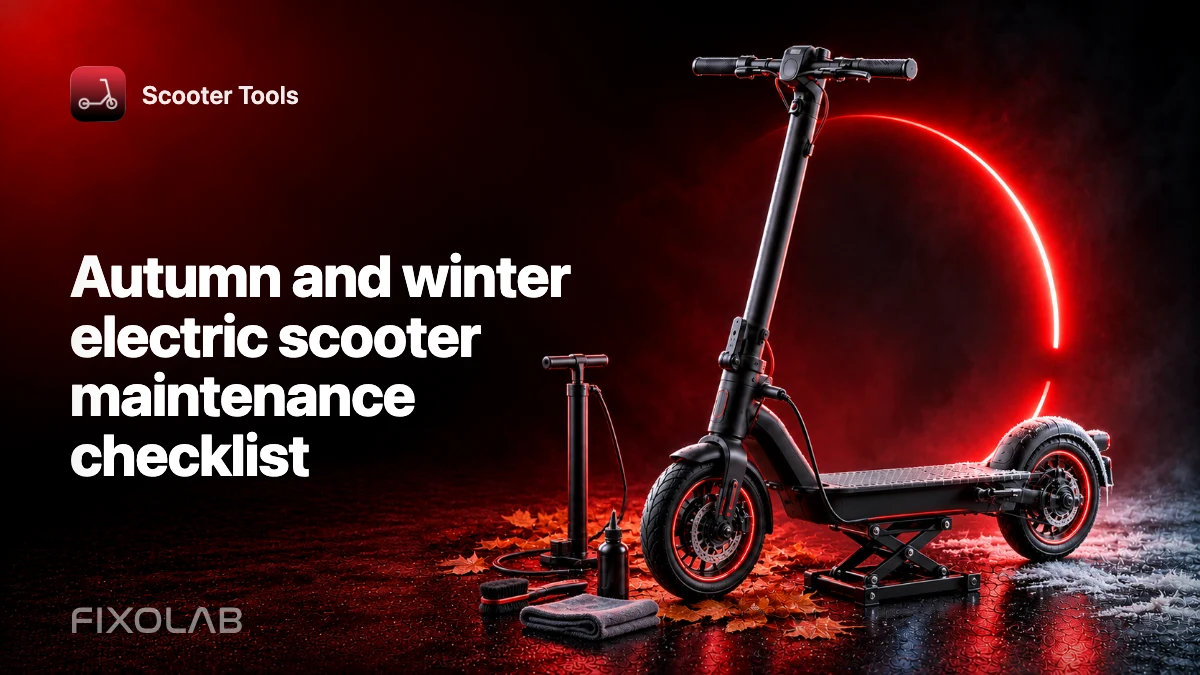
| FixoLab
Autumn and winter electric scooter maintenance checklist
Prepare tires, brakes, battery, lights, seals and storage for colder, wetter scooter riding while using trip data to reset range expectations.
| FixoLab
When to charge an electric scooter after a cold or wet ride
Decide when charging is safe after rain, cold or a hard ride by checking moisture, battery temperature, connectors and manufacturer limits.
| FixoLab
How to clean an electric scooter without causing water damage
Clean an electric scooter safely around its battery, motor, display and charging port while avoiding pressure washing and unsafe chemicals.