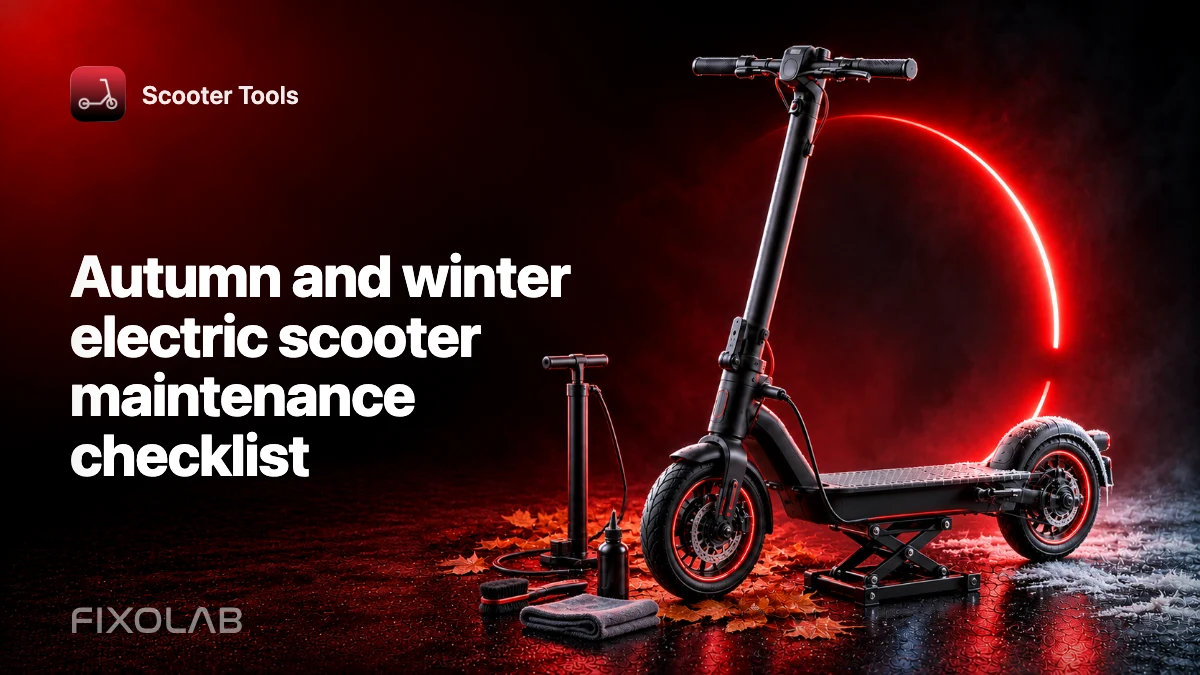
Autumn and winter electric scooter maintenance checklist
Autumn combines lower temperature, rain, leaves and shorter daylight. Winter can add frost, road salt and long periods without riding. The safest seasonal plan addresses mechanical condition and battery care before the first difficult commute.
Scooter Tools can help reset your range expectations, but it cannot inspect the vehicle for you.
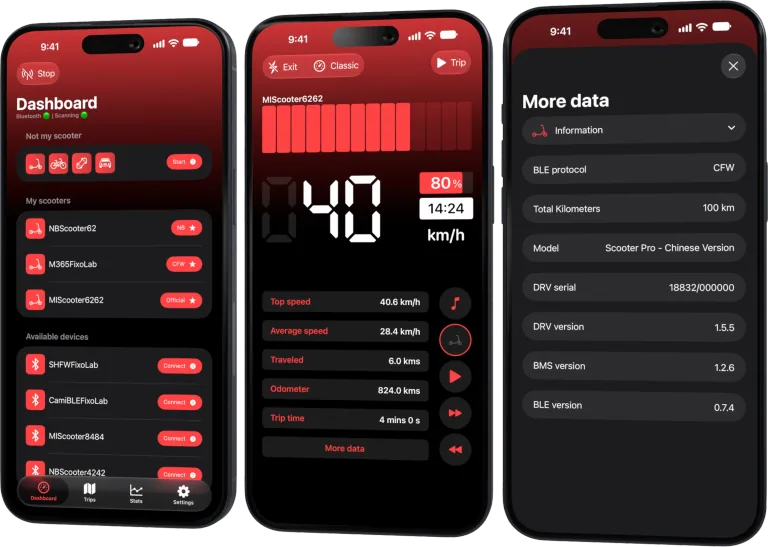
Your Xiaomi and Ninebot scooter dashboard
Monitor speed, battery, mileage, temperature and routes in real time, with support for official and custom firmware
Available on Android, iPhone, iPad and Mac, with iCloud sync on Apple devices
Tires
- Measure pneumatic pressure cold at the interval in the manual.
- Inspect tread, cuts, valve and repeated air loss.
- Check solid tires for cracks, deformation and flat spots.
- Never assume a tire safe in summer has adequate wet or cold grip.
Temperature changes pressure, and wet leaves or ice can remove grip regardless of tread.
Brakes
Inspect wear, lever feel, cables or hoses and visible hardware. Clean road contamination using the approved method and test at low speed. Leave more stopping distance on cold or wet surfaces.
Mechanical brakes must work even if regeneration feels strong.
Battery and charging
Expect less usable range in cold conditions. Charge only within the model’s permitted temperature range and never plug into a wet port. Use the approved charger in a dry, ventilated location.
If the scooter will be stored, follow the exact storage charge and periodic-check guidance.
Water and road salt
Check the charging-port cover, display lens, cable entries and battery enclosure. Clean salt and grime without pressure washing and dry naturally. An IP rating does not protect damaged seals forever.
Stop after immersion or an electrical symptom and obtain service.
Lights and visibility
Clean lights and reflectors, confirm they work and use visible clothing. Darkness and spray reduce how early other road users see a small vehicle. Check local lighting rules.
Folding mechanism and fasteners
Mud can hide looseness and corrosion. Inspect the stem, latch, deck and fenders under the manual’s procedure. Do not lubricate a location unless the manufacturer permits it, and keep all lubricant away from brakes.
Reset the range plan
Repeat a normal route in cooler weather and note battery change, temperature, wind, pressure and load. Keep a larger reserve until several trips establish the seasonal pattern.
Do not use a single summer maximum to plan a winter return trip.
Decide when not to ride
Avoid ice, flooding, deep snow, severe wind and visibility below safe conditions. Local rules may prohibit riding in specific weather or on untreated paths. Choosing another transport is part of maintenance planning, not a failure of it.
Combine this list with why scooter range drops in cold weather.
Frequently asked questions
Should tire pressure be checked more often in cold weather?
Check at the model’s interval and after major temperature changes because pressure can fall as air cools.
Can I charge in a freezing garage?
Only if battery and environment are within the exact permitted charging range.
Does salt damage a scooter?
Salt and moisture can accelerate corrosion. Remove them with the approved low-moisture method.
Can Scooter Tools warn about ice?
No. Observe the actual surface and weather; the app does not measure road grip.
Your Xiaomi and Ninebot scooter dashboard
Monitor speed, battery, mileage, temperature and routes in real time, with support for official and custom firmware
Available on Android, iPhone, iPad and Mac, with iCloud sync on Apple devices
| FixoLab
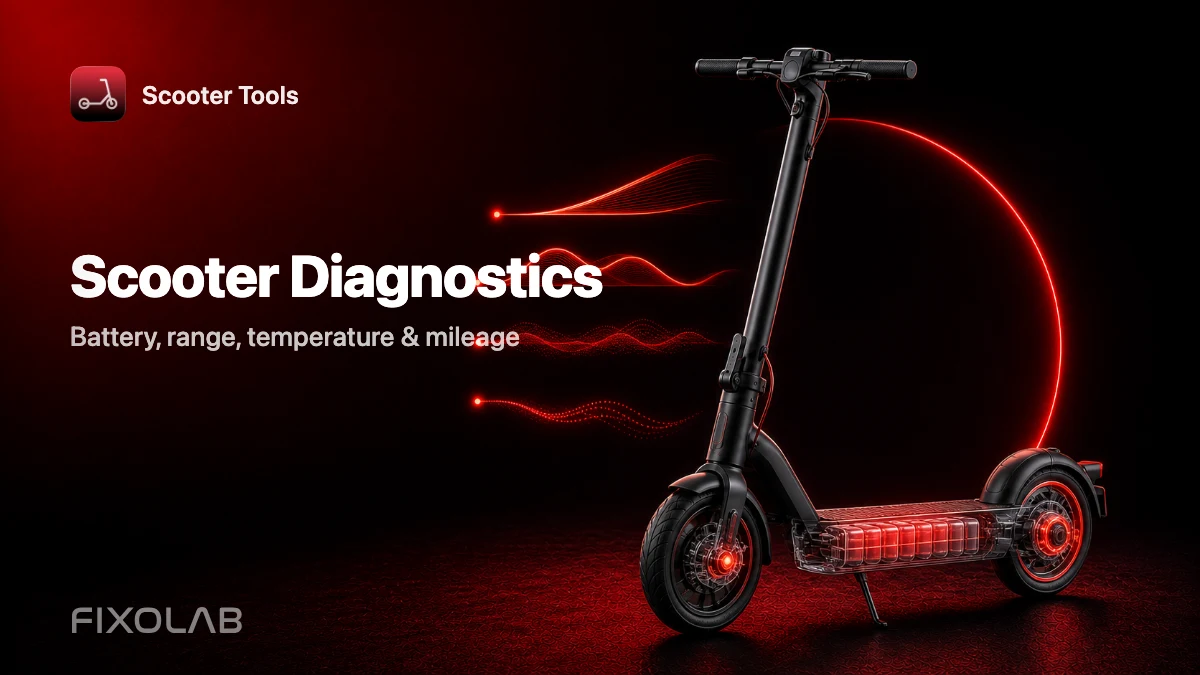
Reading Battery, Range, Temperature and Mileage in Scooter Tools
How Scooter Tools reads battery percentage, estimated range, temperature and mileage directly from your scooter's BMS over Bluetooth and shows them on your live dashboard.
| FixoLab
Eco, Drive and Sport modes on electric scooters explained
Compare electric scooter riding modes by acceleration, speed, range and traction, and use trip data to choose a mode for the route rather than the label.
| FixoLab
What to watch in electric scooter motor and battery temperature
Interpret available scooter temperature data in context, recognize thermal warning signs and avoid using one sensor value as a complete diagnosis.
| FixoLab
Electric scooter pre-ride safety checklist
Run a quick pre-ride check of tires, brakes, folding parts, battery, lights, weather and Scooter Tools connection before every journey.