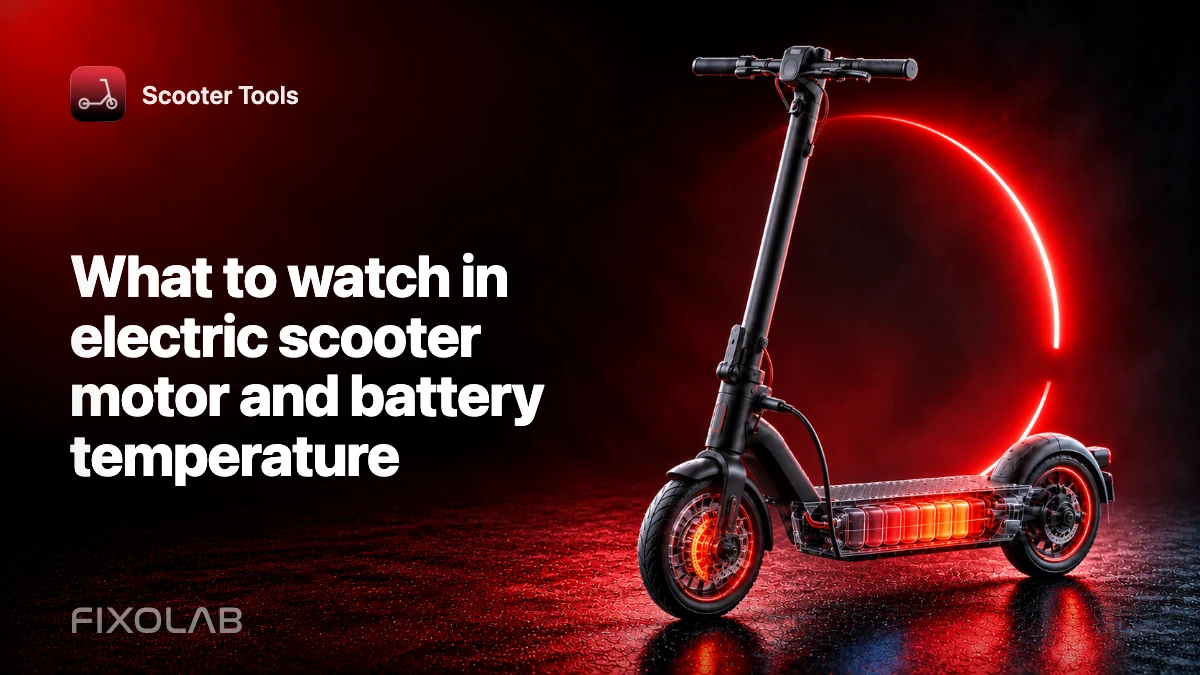
What to watch in electric scooter motor and battery temperature
Temperature affects battery performance, charging, motor efficiency and electronic protection. A demanding climb can warm the system; cold can reduce usable battery and acceleration. The difficult part is that a scooter may expose one or several sensors, and their labels do not describe every internal component.
Use telemetry as context, not as permission to touch, charge or continue riding a suspect vehicle.
Your Xiaomi and Ninebot scooter dashboard
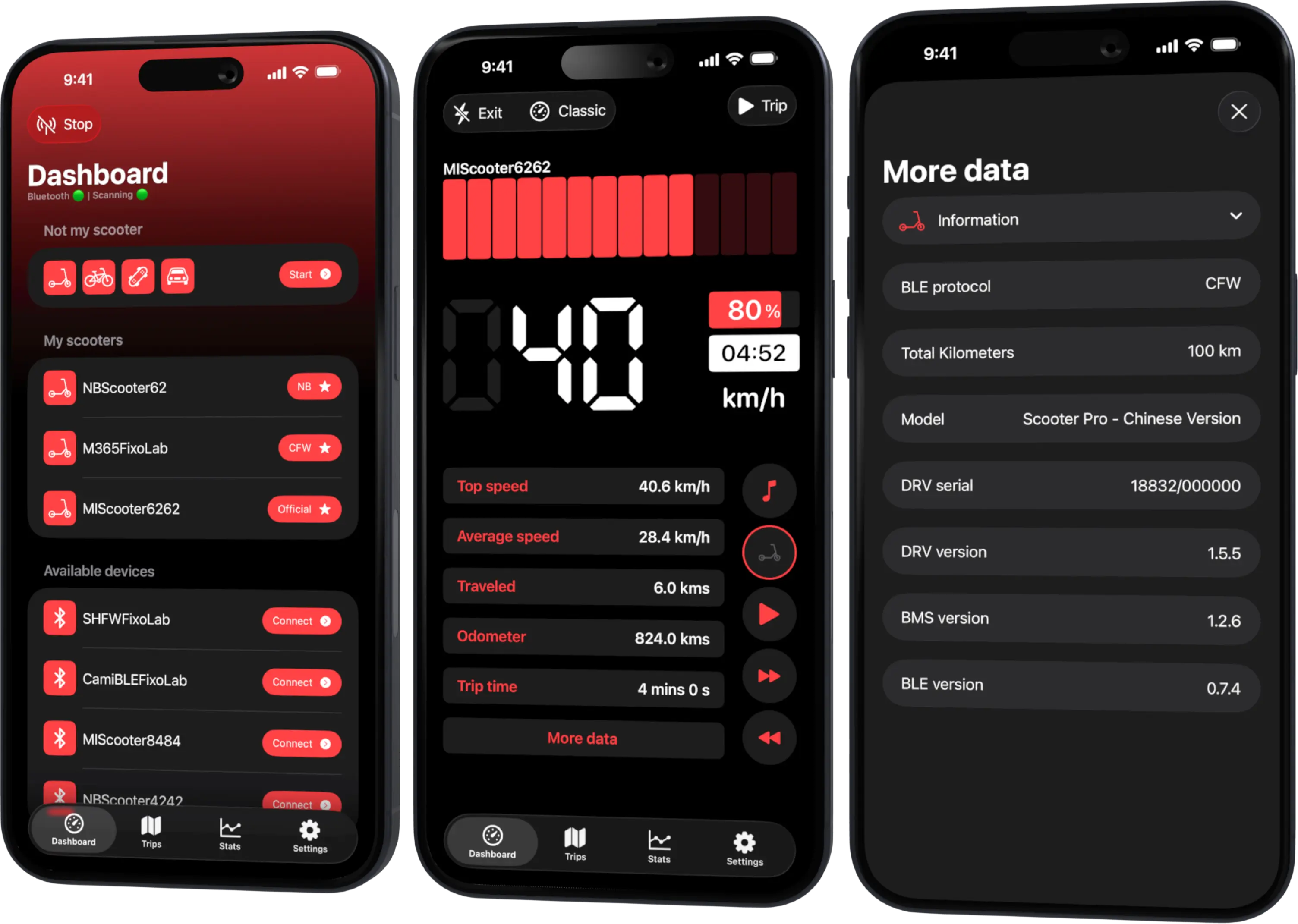
Monitor speed, battery, mileage, temperature and routes in real time, with support for official and custom firmware
Available on Android, iPhone, iPad and Mac, with Wear OS support and iCloud sync on Apple devices
Which temperature are you reading?
Depending on model and protocol, a value may represent the battery pack, controller, motor estimate or another sensor. Confirm the meaning in the model documentation and app label. Do not compare two differently located sensors as if they were identical.
Scooter Tools can only show data the compatible scooter or phone makes available.
Normal reasons for change
Temperature can rise with:
- sustained climbing or acceleration;
- higher rider and cargo mass;
- warm ambient air and direct sun;
- low tire pressure or brake drag;
- repeated stop-start riding;
- charging.
It can fall during cold storage, airflow and low-demand riding. A number is meaningful only with this context.
Protective behavior
Firmware may reduce power, limit charging or report a fault outside its permitted range. Do not bypass that protection or repeatedly restart the scooter to force operation.
If the manual specifies a cool-down or warm-up procedure, follow it in a dry, ventilated place away from external heaters.
Physical warnings outrank the dashboard
Stop using or charging when there is severe localized heat, swelling, smoke, hissing, chemical smell, melted material or a returning battery fault. Move away if safe and contact emergency or qualified service as appropriate.
A normal-looking sensor value does not prove that every cell, connector and controller component is normal.
Compare repeatable rides
Record the same climb or commute with similar weather, load, pressure and mode. Note starting temperature and whether the scooter had just charged. Look for a repeated change rather than a single peak.
Do not deliberately overheat the scooter to find its limit. Stop the test before safety margins or manufacturer warnings are reached.
Charging temperature
Riding temperature and permitted charging temperature are not necessarily the same. After cold, rain or hard use, let the scooter meet the manual’s charging conditions before plugging in. Never accelerate the process with a heater or freezer.
Data-sharing safety
For diagnosis, share model, approximate ambient temperature, route type, sensor label and redacted error. Do not publish exact routes, device identifiers, pairing material or raw BLE frames.
Continue with battery-health warning signs and useful data.
Frequently asked questions
What temperature is too high?
Use the limits and warnings for the exact model and the specific sensor. There is no universal dashboard threshold.
Can the motor be hot while the displayed battery is normal?
Yes. Different components and sensor locations can have different temperatures.
Should I cool the scooter with water?
No. Stop safely, power down as instructed and allow natural cooling in a suitable environment.
Why is performance weaker in cold weather?
Cold battery chemistry can deliver less usable power and energy, while tire pressure and road conditions may also change.
Your Xiaomi and Ninebot scooter dashboard
Monitor speed, battery, mileage, temperature and routes in real time, with support for official and custom firmware
Available on Android, iPhone, iPad and Mac, with Wear OS support and iCloud sync on Apple devices
| FixoLab
Reading Battery, Range, Temperature and Mileage in Scooter Tools
How Scooter Tools reads battery percentage, estimated range, temperature and mileage directly from your scooter's BMS over Bluetooth and shows them on your live dashboard.
| FixoLab
Why electric scooter range drops in cold weather
Understand why cold weather reduces Xiaomi and Ninebot scooter range and how to interpret battery, temperature and trip data in Scooter Tools.
| FixoLab
When to charge an electric scooter after a cold or wet ride
Decide when charging is safe after rain, cold or a hard ride by checking moisture, battery temperature, connectors and manufacturer limits.
| FixoLab
Electric scooter battery health warning signs and useful data
Separate normal range variation from possible electric scooter battery trouble using repeatable rides, available telemetry and physical warning signs.