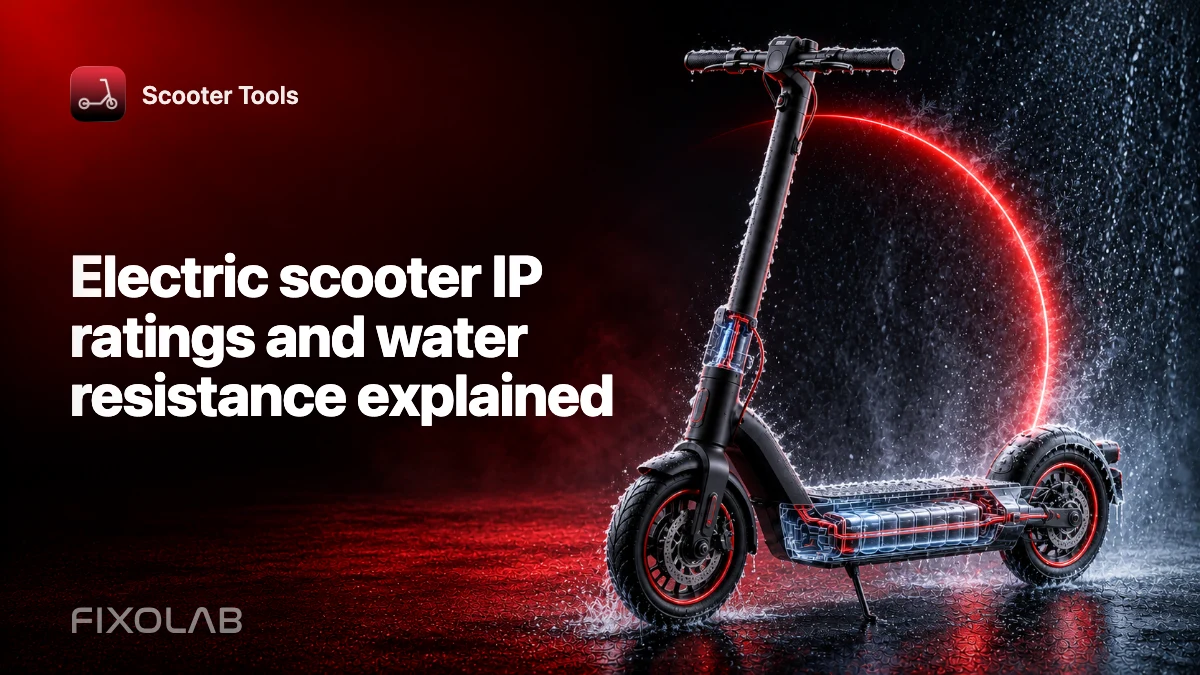
Electric scooter IP ratings and water resistance explained
An IP code can help compare tested resistance to dust and water, but it is often misunderstood as a waterproof guarantee. Electric scooters combine a battery, controller, display, motor, wiring and charging port, and those parts may not all have the same protection.
Use the rating as one input alongside the exact manual, warranty terms and condition of the scooter—not as a reason to enter deep water.
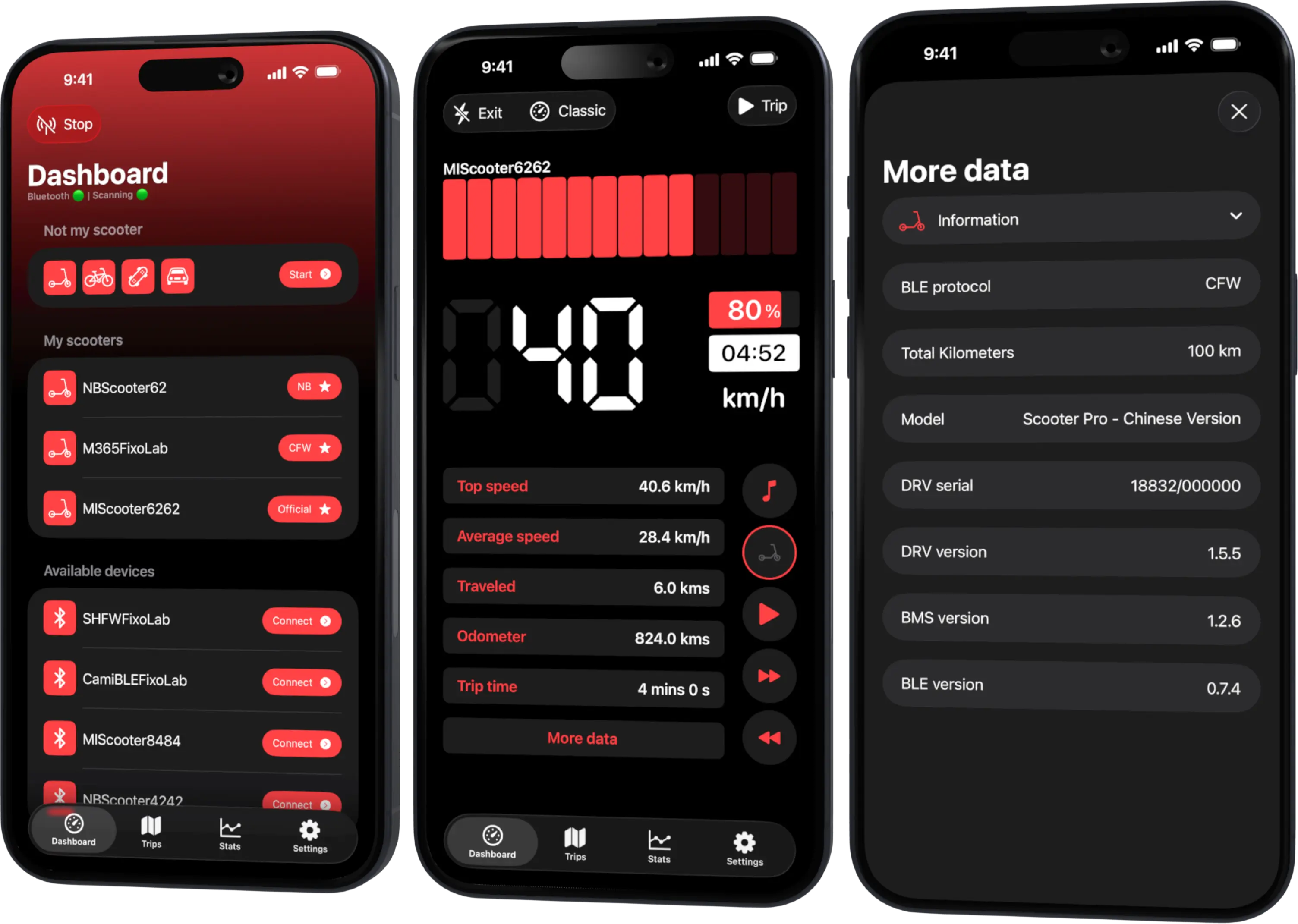
Your Xiaomi and Ninebot scooter dashboard
Monitor speed, battery, mileage, temperature and routes in real time, with support for official and custom firmware
Available on Android, iPhone, iPad and Mac, with Wear OS support and iCloud sync on Apple devices
How to read an IP code
An IP code normally contains two characters after IP. The first describes protection against solid particles; the second describes protection against water under a defined test. An X means that the corresponding protection was not specified by that code.
The numbers are test categories, not a general percentage of protection. A higher water digit describes a different or more demanding test, but it still does not mean unlimited depth, time, pressure or temperature.
The whole scooter may not share one rating
A manufacturer may publish a vehicle rating, separate ratings for components or exclusions for the charging port and other openings. Marketing summaries can omit those distinctions.
Verify the exact model and regional version in the official manual. Do not transfer a rating from a visually similar Xiaomi or Ninebot model, and do not assume a replacement display, controller cover or battery has retained the original protection.
Why resistance changes with age
Laboratory tests use a new specimen in a controlled setup. Real scooters experience:
- vibration and repeated heating and cooling;
- impacts to the deck, fenders and covers;
- ageing seals and adhesive;
- tire and brake work that may disturb cables;
- dirt around the charging-port cover;
- third-party modifications or repairs.
A missing screw, pinched gasket or cracked display lens can create a path for moisture even when the model originally had a useful rating.
Rain is not the only water exposure
Pressure washing can be more aggressive than ordinary rain because a jet targets seams at close range. Flood water may carry conductive dirt and can immerse components. Condensation can form when a cold scooter moves into a warm humid room.
Avoid deliberate spray tests. They prove little and can create damage that would not have occurred during normal use.
Inspect after unexpected exposure
- Turn the scooter off and do not connect a charger.
- Move it to a dry, ventilated location without external heat.
- Wipe the exterior and inspect openings, seals and the charging port.
- Follow the manufacturer’s drying and service instructions.
- Seek qualified service if there was immersion, visible internal moisture, heat, smell, swelling or electrical malfunction.
Do not open a battery enclosure unless you are qualified and the service procedure explicitly calls for it. Lithium battery damage can be hazardous.
What Scooter Tools can show
After the scooter is safe to power according to its documentation, Scooter Tools may show available telemetry and error state from a compatible model. That can reveal an abnormal reading, but absence of an error does not prove that the interior is dry.
The app cannot measure seal integrity, moisture inside a battery or corrosion. Physical inspection and qualified service remain necessary.
A better wet-weather decision
Ask four questions: does the exact manual allow the condition, are all covers and seals intact, can you avoid standing water, and will grip and visibility remain safe? If any answer is no, postpone the ride.
Continue with riding in rain: grip, braking and range for the road-safety side.
Frequently asked questions
Does IP54 mean waterproof?
No. It describes specific dust and water test protection. Check the manufacturer’s limitations for the exact product.
Can I wash the scooter with a pressure washer?
Generally no. A concentrated jet can force water past seals. Use the cleaning method in the manual.
Does Scooter Tools display the IP rating?
The authoritative source is the model documentation. Do not use an app label in place of the current manual.
Is a used scooter still protected like a new one?
Not necessarily. Age, impacts and repair quality can change seals and enclosures.
Your Xiaomi and Ninebot scooter dashboard
Monitor speed, battery, mileage, temperature and routes in real time, with support for official and custom firmware
Available on Android, iPhone, iPad and Mac, with Wear OS support and iCloud sync on Apple devices
| FixoLab
When to charge an electric scooter after a cold or wet ride
Decide when charging is safe after rain, cold or a hard ride by checking moisture, battery temperature, connectors and manufacturer limits.
| FixoLab
How to clean an electric scooter without causing water damage
Clean an electric scooter safely around its battery, motor, display and charging port while avoiding pressure washing and unsafe chemicals.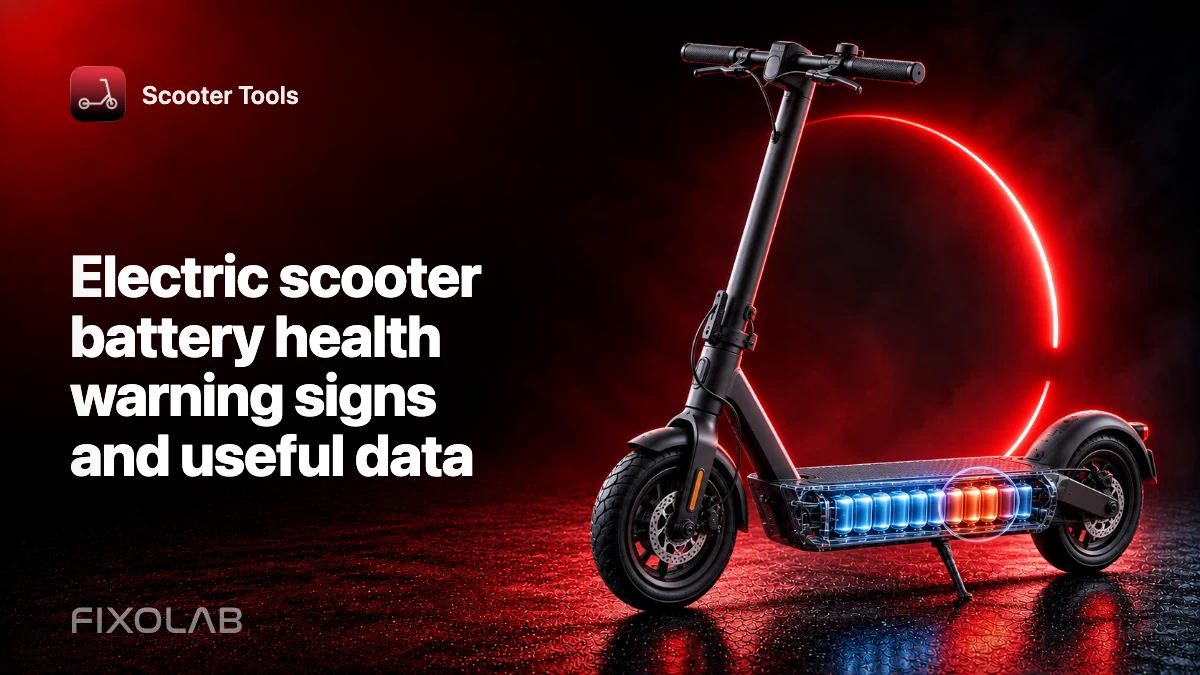
| FixoLab
Electric scooter battery health warning signs and useful data
Separate normal range variation from possible electric scooter battery trouble using repeatable rides, available telemetry and physical warning signs.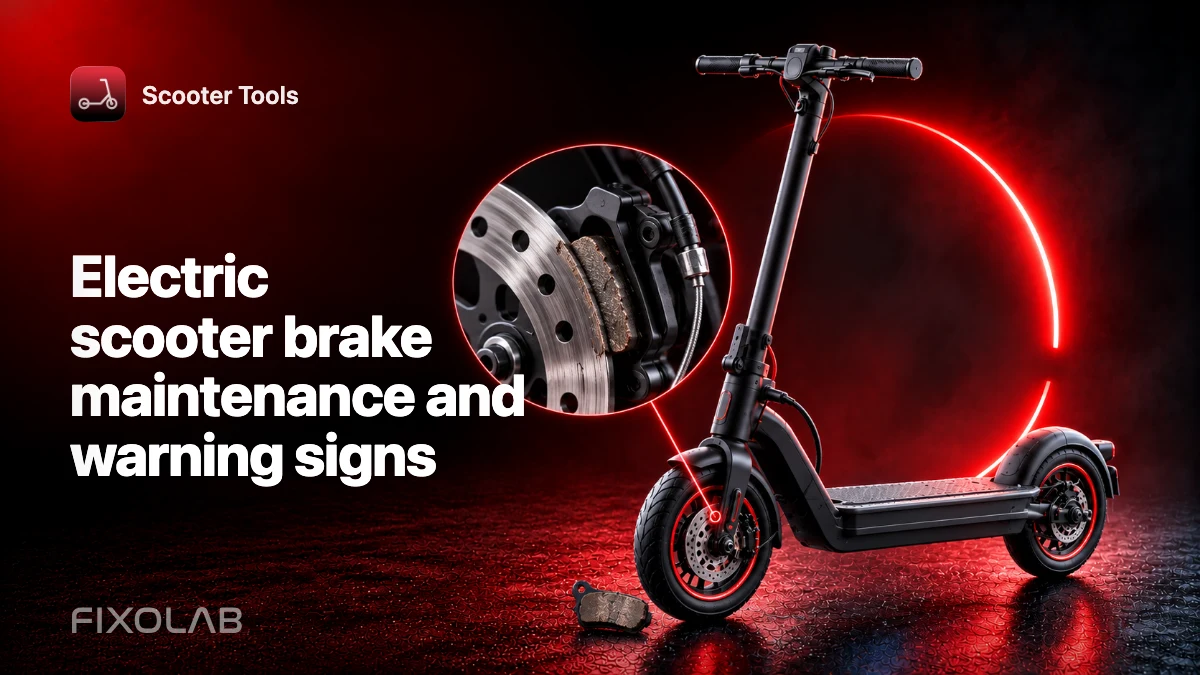
| FixoLab
Electric scooter brake maintenance and warning signs
Recognize brake wear, changing lever feel and unsafe stopping behavior on an electric scooter, with a practical inspection and service checklist.