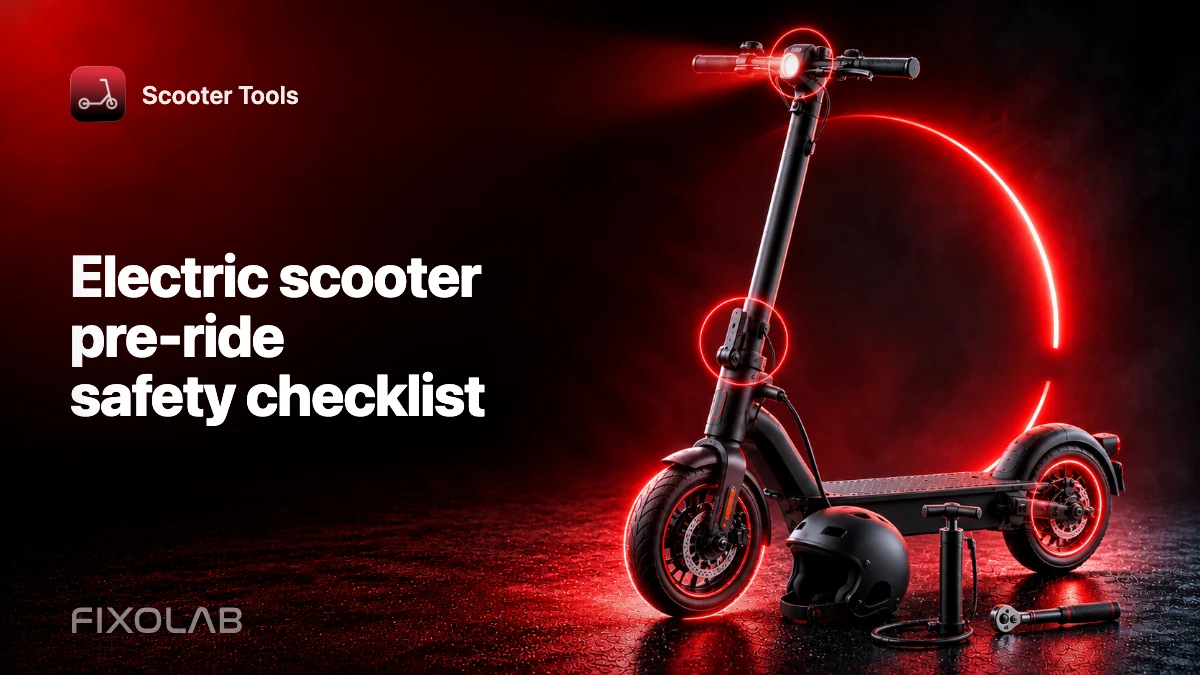
Electric scooter pre-ride safety checklist
A short check before moving can catch a soft tire, changed brake lever or loose folding latch before it becomes a road problem. The app adds useful state, but physical safety comes first.
Use the exact manufacturer’s inspection schedule for deeper maintenance. This checklist is a daily screen, not a replacement for service.

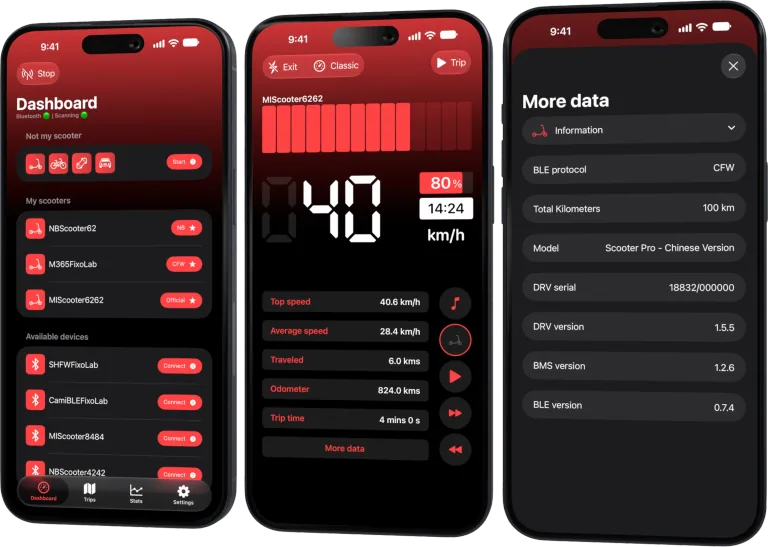
Your Xiaomi and Ninebot scooter dashboard
Monitor speed, battery, mileage, temperature and routes in real time, with support for official and custom firmware
Available on Android, iPhone, iPad and Mac, with iCloud sync on Apple devices
1. Look around the scooter
Check for new impact marks, cracks, loose parts, leaks, swelling and damaged cables. Confirm the stem and folding mechanism are fully locked with no unexpected play. Remove anything that can touch a wheel or brake.
Do not ride after structural damage or a battery warning sign.
2. Check both tires
For pneumatic tires, measure cold pressure with a gauge and use the model-specific range. Inspect every tire for cuts, embedded debris, abnormal wear, sidewall damage and secure seating.
Solid tires still need checks for cracks, deformation and wear.
3. Test the brakes
Operate each control while stationary. Look for changed travel, leaks, frayed cables and visible damage. Then perform a gentle walking-speed test in a clear area.
Electronic or regenerative braking does not excuse a weak mechanical brake.
4. Lights and visibility
Confirm required front and rear lights, brake indication and reflectors. Clean dirty lenses. Choose visible equipment appropriate for the time and weather.
5. Battery and controls
Power on and check for manufacturer errors, abnormal sound, smell or heat. Confirm the battery is sufficient for the route plus a reserve. Test throttle response only in a safe position according to the manual.
Make sure the charging-port cover is closed and the charger is not attached.
6. Route, weather and legal conditions
Check for rain, ice, flooding, severe wind, closures and local restrictions. Plan around steep grades and keep a fallback if the route exceeds current range or conditions.
Wear the protective equipment required by law and recommended for the ride.
7. Scooter Tools setup
While stationary, select the correct scooter and protocol, confirm live values, set the intended dashboard and start a trip if desired. Mount the phone securely and stop before any later interaction.
No Bluetooth value replaces the mechanical checks above.
The 30-second version
Before every departure ask: tires, brakes, latch, lights, battery, weather, route, phone secured? If any answer is uncertain, resolve it before moving.
After repair, storage or a crash, use a full inspection rather than the short version.
Frequently asked questions
Is checking the app enough?
No. The app cannot see tire damage, brake wear, loose hardware or road grip.
Must I check pressure every ride?
Follow the manufacturer’s interval, but visually inspect every ride and measure after temperature changes or suspicious handling.
What if Bluetooth does not connect?
Do not troubleshoot while moving. The scooter may still require its normal physical checks and official operating guidance.
When should I cancel the ride?
When a safety-critical condition is unresolved: tire, brake, structure, battery, visibility, weather or legal route.
Your Xiaomi and Ninebot scooter dashboard
Monitor speed, battery, mileage, temperature and routes in real time, with support for official and custom firmware
Available on Android, iPhone, iPad and Mac, with iCloud sync on Apple devices
| FixoLab
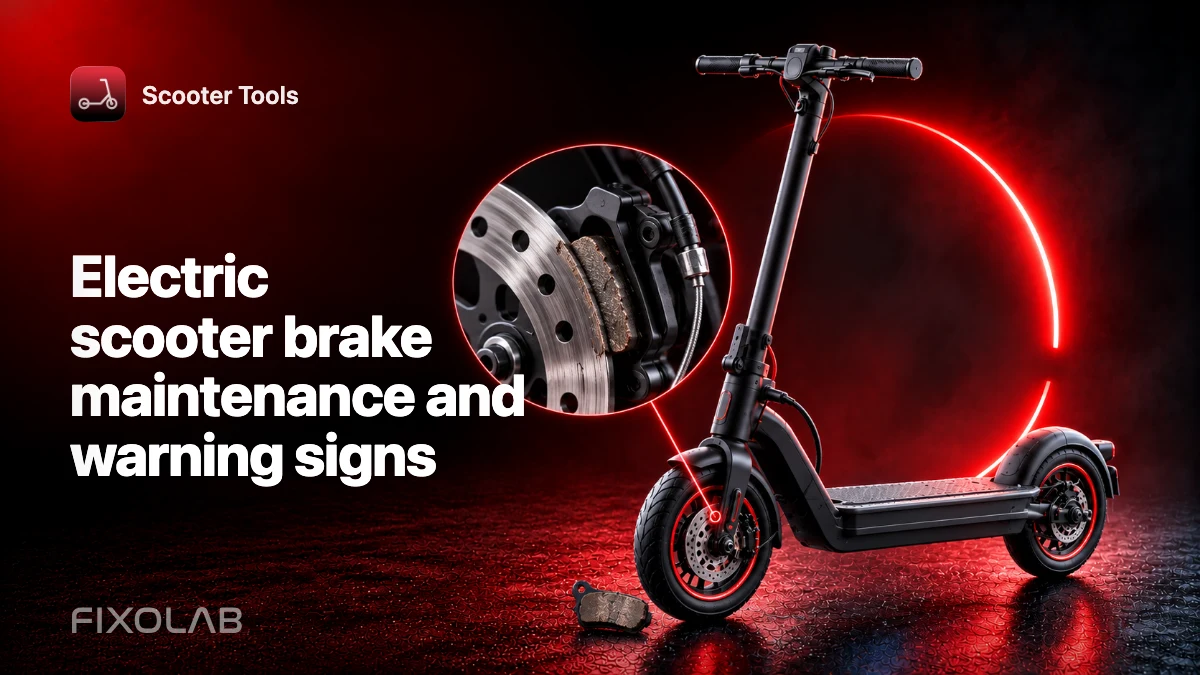
Electric scooter brake maintenance and warning signs
Recognize brake wear, changing lever feel and unsafe stopping behavior on an electric scooter, with a practical inspection and service checklist.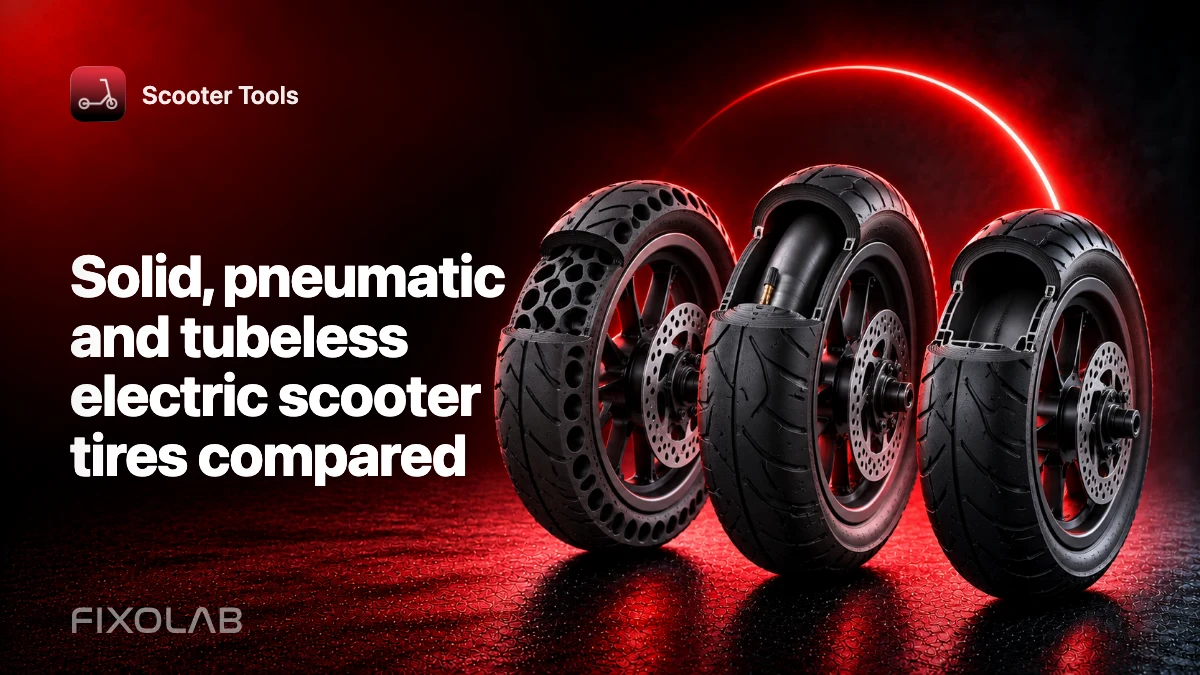
| FixoLab
Solid, pneumatic and tubeless electric scooter tires compared
Compare solid, tubed pneumatic and tubeless electric scooter tires for grip, comfort, puncture risk, maintenance and effect on ride data.
| FixoLab
Grip, braking and range when riding an electric scooter in the rain
Understand how rain changes electric scooter grip, braking distance, visibility and battery use, and when wet conditions mean the ride should wait.
| FixoLab
Autumn and winter electric scooter maintenance checklist
Prepare tires, brakes, battery, lights, seals and storage for colder, wetter scooter riding while using trip data to reset range expectations.