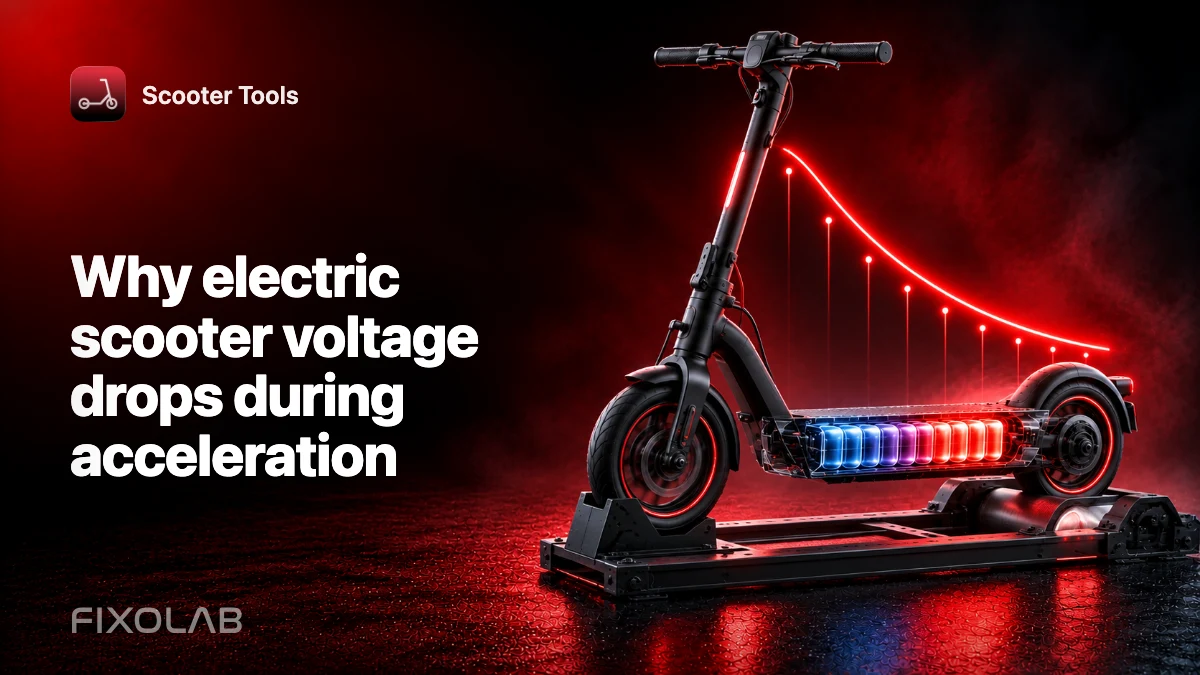
Why electric scooter voltage drops during acceleration
Acceleration demands current, so pack voltage temporarily falls because every battery has internal resistance. Some sag is normal; the amount and recovery pattern provide context.
Scooter Tools can show supported local Bluetooth telemetry and trip context. It does not flash firmware, bypass ownership, certify a repair or replace the scooter manufacturer’s safety instructions.

Your Xiaomi and Ninebot scooter dashboard
Monitor speed, battery, mileage, temperature and routes in real time, with support for official and custom firmware
Available on Android, iPhone, iPad and Mac, with iCloud sync on Apple devices
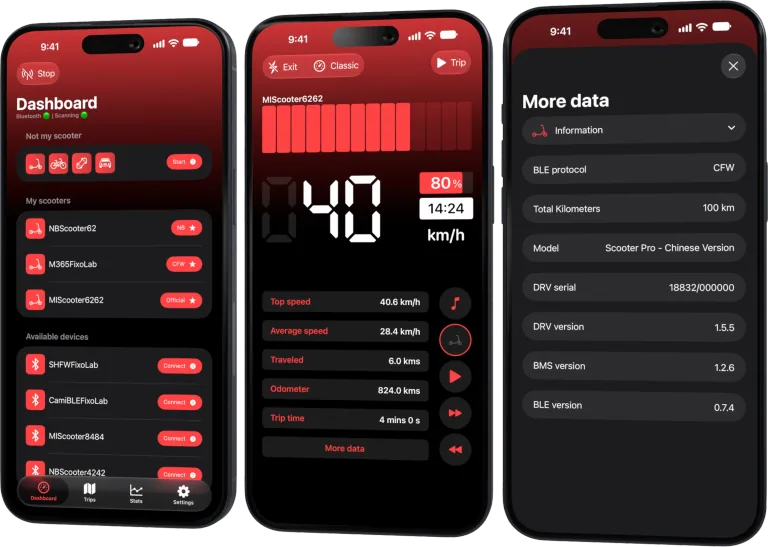
Observe the load relationship
Compare voltage while stopped, during a similar acceleration and after returning to rest. A drop that recovers quickly is different from a permanently lower resting voltage.
Consider charge and temperature
Sag grows near empty and in cold conditions. Compare only at similar state of charge, temperature, rider load and route gradient.
Look for symptoms as well as numbers
Reduced power, sudden percentage collapse, controller cutout or shutdown under moderate load makes the pattern more important than a small numeric drop alone.
Keep testing conservative
Do not repeat full-power acceleration solely to stress the battery. Use normal riding data in a safe legal area and seek service if cutouts or severe sag recur.
Safe review checklist
- Use a familiar safe route.
- Match charge and temperature.
- Compare moving and resting voltage.
- Stop testing after a cutout or warning.
Frequently asked questions
Does all voltage sag mean a bad battery?
No. Load, temperature and state of charge naturally cause sag.
Can tire pressure affect the observation?
Yes. More rolling resistance increases required power.
Can firmware changes alter sag?
They can alter requested current, which is one reason comparisons need consistent configuration.
Your Xiaomi and Ninebot scooter dashboard
Monitor speed, battery, mileage, temperature and routes in real time, with support for official and custom firmware
Available on Android, iPhone, iPad and Mac, with iCloud sync on Apple devices
| FixoLab
Electric scooter charger warning signs that need attention
Recognize heat, noise, odor, cable and charging behavior that should stop a charging session and trigger service.
| FixoLab
What to check when an electric scooter charger is not charging
Use a safe diagnostic sequence for a scooter that will not charge without opening the battery or bypassing protection.
| FixoLab
Autumn and winter electric scooter maintenance checklist
Prepare tires, brakes, battery, lights, seals and storage for colder, wetter scooter riding while using trip data to reset range expectations.
| FixoLab
When to charge an electric scooter after a cold or wet ride
Decide when charging is safe after rain, cold or a hard ride by checking moisture, battery temperature, connectors and manufacturer limits.