Electric scooter regenerative braking explained
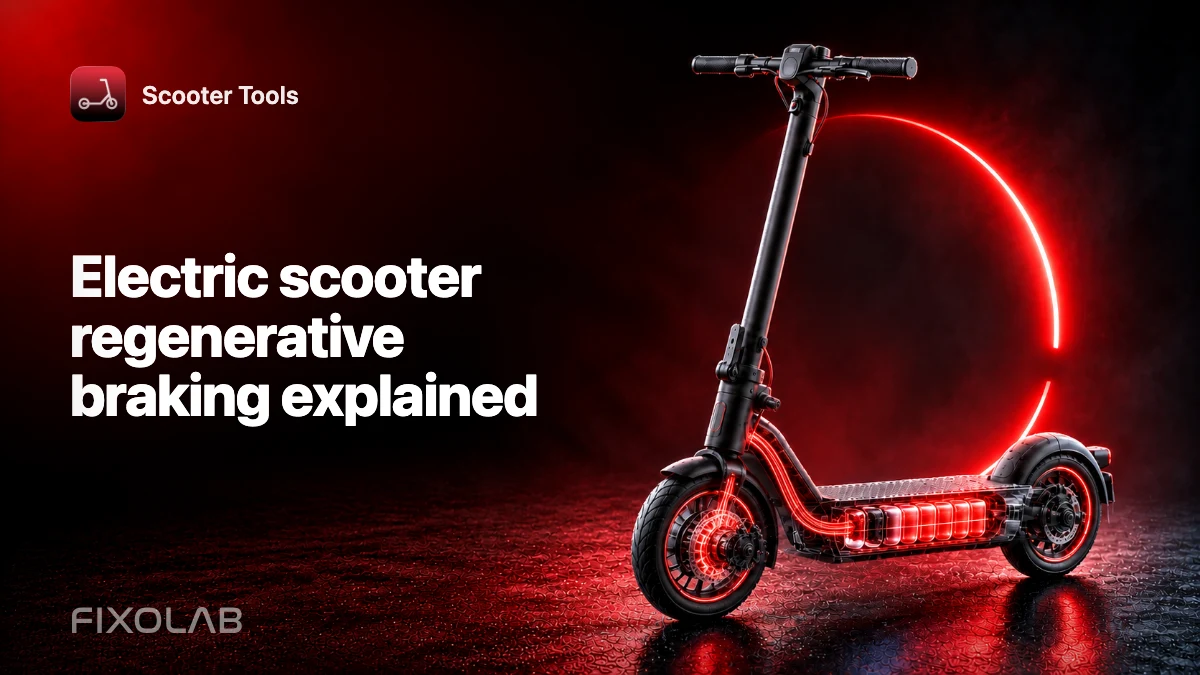
Regenerative braking uses the drive motor as a generator while the scooter slows. Some of the vehicle’s kinetic energy returns to the electrical system instead of becoming only heat at the mechanical brake.
That sounds simple, but the available braking force depends on speed, battery state, controller limits, traction and model design. Regeneration is not a substitute for correctly maintained mechanical brakes.
Your Xiaomi and Ninebot scooter dashboard
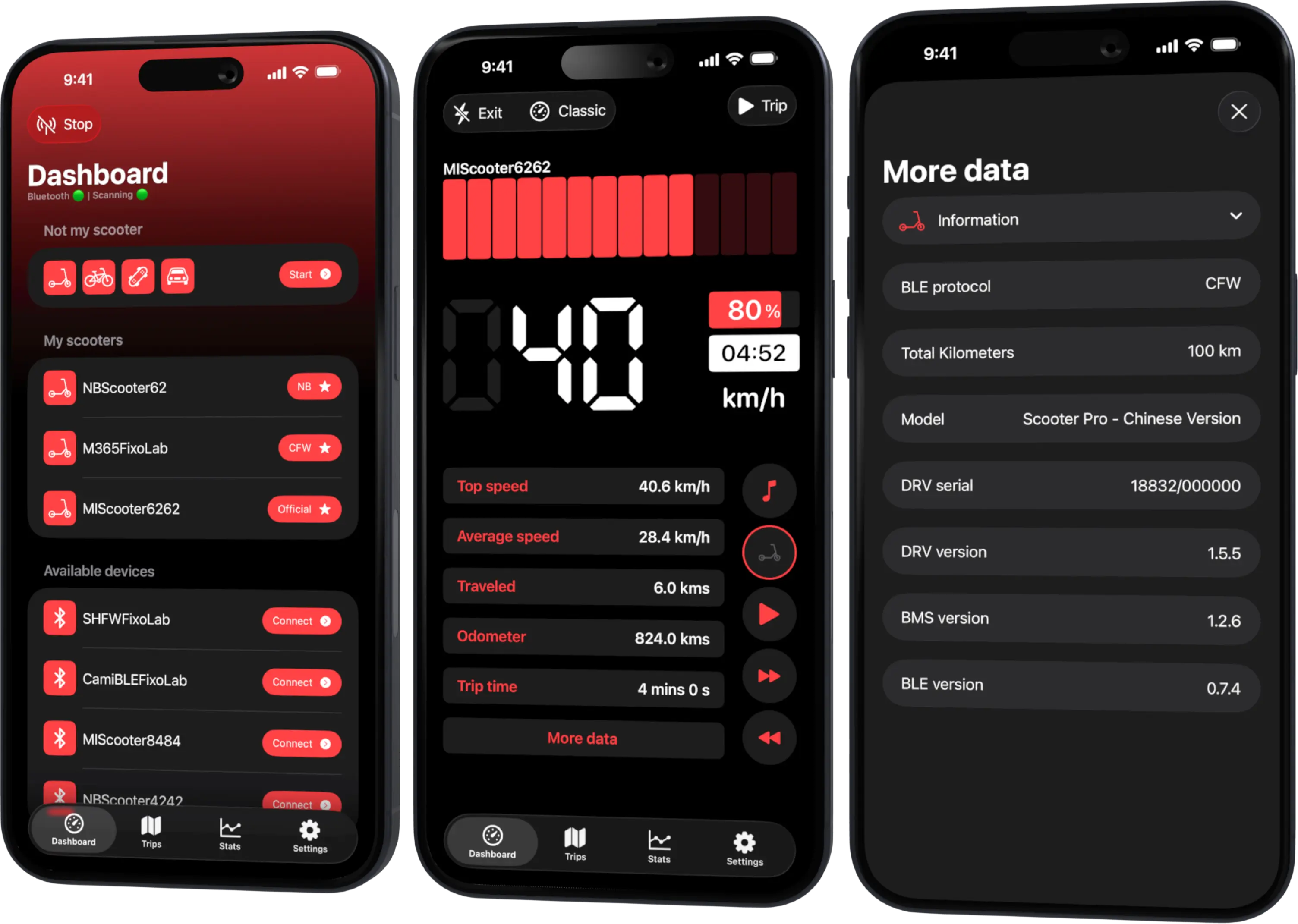
Monitor speed, battery, mileage, temperature and routes in real time, with support for official and custom firmware
Available on Android, iPhone, iPad and Mac, with Wear OS support and iCloud sync on Apple devices
What happens during regeneration
The controller changes how it drives the motor so that rotation produces electrical energy and resisting torque. The battery-management system and controller must be able to accept that energy.
At low speed there is less recoverable energy and many systems provide less regenerative force. At high battery charge, the scooter may limit regeneration because the pack has little room to accept energy.
Why the feeling changes
Regenerative response can vary with:
- current speed;
- battery percentage and temperature;
- selected riding or energy-recovery setting;
- firmware and controller limits;
- motor and wheel traction;
- whether the brake lever combines electronic and mechanical braking.
Learn the behavior in a safe, controlled area after a configuration or firmware change. Never test maximum braking in traffic.
It cannot replace mechanical brakes
A scooter still needs the mechanical braking system specified by its manufacturer. Electronic braking can be reduced by a full battery, electrical fault, controller shutdown, low speed or loss of traction.
Inspect pads, disc or drum, cables, hydraulic parts and tire condition at the documented intervals. If lever travel or stopping response changes, service the scooter rather than increasing an electronic setting to mask the problem.
Grip remains the limit
The tire must transmit braking force to the road. Strong regeneration on a slippery surface can contribute to a skid, especially if it acts mainly on one wheel. Brake progressively and reduce speed before wet paint, gravel, ice and sharp turns.
An app cannot know the friction available under the wheel.
How much range does it recover?
Regeneration can recover some energy during deceleration and descents, but every conversion has losses. It does not recharge the energy already spent on aerodynamic drag, rolling resistance and climbing.
Do not plan a journey on the assumption that a descent will restore all the charge used uphill. A high state of charge may also limit recovery at the start of the descent.
Use Scooter Tools as an observation aid
On compatible models, available current, battery, speed or trip data can help compare similar routes. Look for repeatable total consumption, not a dramatic instantaneous value.
Scooter Tools does not modify firmware or guarantee a regenerative setting. Use the scooter’s approved controls and documentation.
Safe checklist
- Maintain the mechanical brakes.
- Use manufacturer-supported settings.
- Test response at low speed away from traffic.
- Leave extra distance in rain or cold.
- Expect different behavior near full charge.
- Stop riding if braking becomes inconsistent or an error appears.
Frequently asked questions
Does regenerative braking fully charge the battery downhill?
No. It recovers only part of the energy, and charging limits may reduce recovery.
Why is it weaker at 100% battery?
The electrical system may limit incoming energy when the battery has little available capacity.
Can I ride with worn mechanical brakes if regeneration works?
No. Regeneration may disappear or weaken. Restore the mechanical system before riding.
Does Scooter Tools change regenerative strength?
Do not assume it does. Available controls depend on the exact model, mode and platform; the app is not a firmware-tuning tool.
Your Xiaomi and Ninebot scooter dashboard
Monitor speed, battery, mileage, temperature and routes in real time, with support for official and custom firmware
Available on Android, iPhone, iPad and Mac, with Wear OS support and iCloud sync on Apple devices
| FixoLab
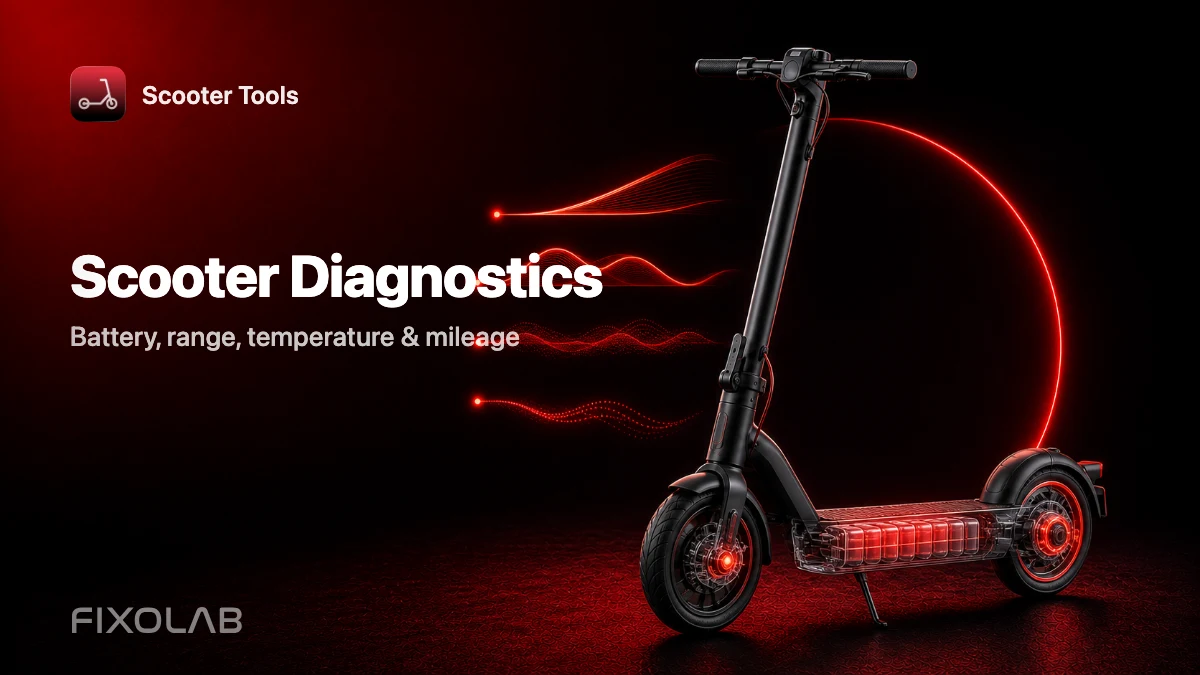
Reading Battery, Range, Temperature and Mileage in Scooter Tools
How Scooter Tools reads battery percentage, estimated range, temperature and mileage directly from your scooter's BMS over Bluetooth and shows them on your live dashboard.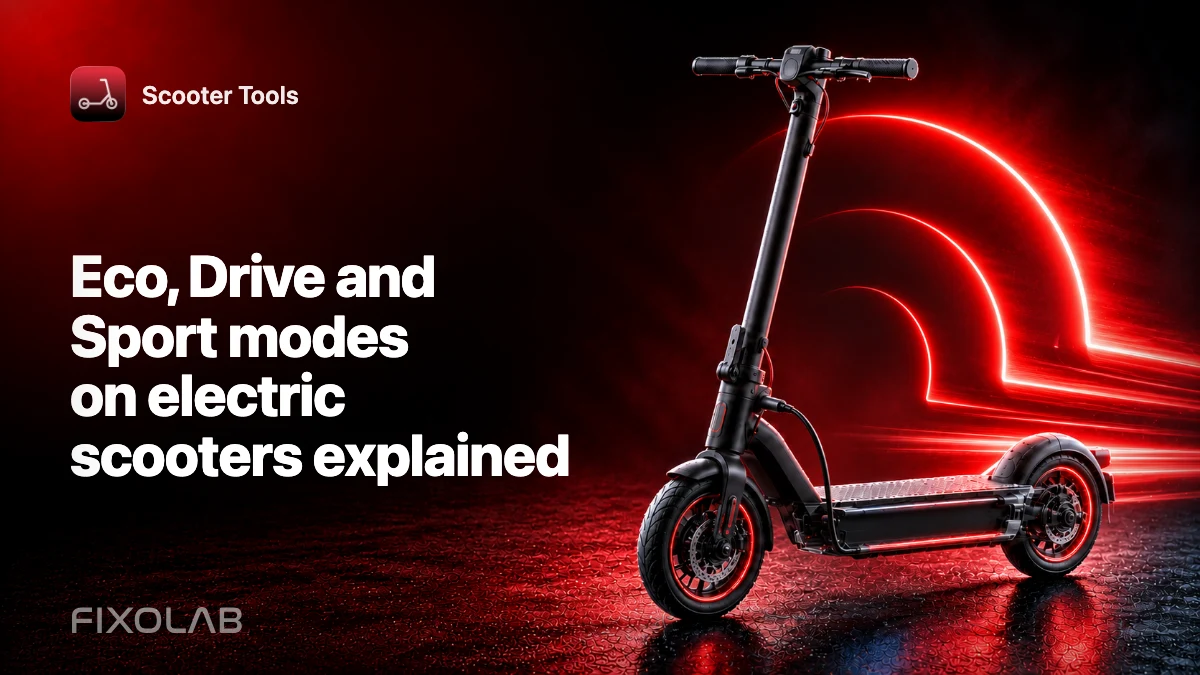
| FixoLab
Eco, Drive and Sport modes on electric scooters explained
Compare electric scooter riding modes by acceleration, speed, range and traction, and use trip data to choose a mode for the route rather than the label.
| FixoLab
Why electric scooter range drops in cold weather
Understand why cold weather reduces Xiaomi and Ninebot scooter range and how to interpret battery, temperature and trip data in Scooter Tools.
| FixoLab
How to estimate real-world electric scooter range
Estimate usable electric scooter range from repeatable trips, battery change and route conditions instead of relying on one advertised maximum.