How to estimate real electric scooter charging time
Dividing capacity by charger power gives a starting point, not an exact finish time. Charging slows near full and the battery-management system can pause for temperature or balancing.
Scooter Tools can show supported local Bluetooth telemetry and trip context. It does not flash firmware, bypass ownership, certify a repair or replace the scooter manufacturer’s safety instructions.
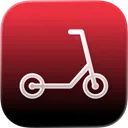
Your Xiaomi and Ninebot scooter dashboard
Monitor speed, battery, mileage, temperature and routes in real time, with support for official and custom firmware
Available on Android, iPhone, iPad and Mac, with iCloud sync on Apple devices
Use compatible units
Convert battery capacity to watt-hours when necessary. A rough ideal time is watt-hours to add divided by charger watts, but label the result as an estimate.
Account for the starting level
A charge from 40 to 80 percent adds far less energy than a charge from nearly empty to full. Percentage itself may be nonlinear, so use it as a practical approximation.
Allow for losses and taper
The charger and battery are not perfectly efficient, and current often falls near the upper limit. The final few percent can take disproportionately long.
Measure your normal case
On a healthy system, log start percentage, temperature, start time and finish time for several ordinary charges. Use the median as a personal planning baseline rather than charging unattended.
Safe review checklist
- Confirm battery capacity and charger rating.
- Estimate only the energy being added.
- Add time for losses and final taper.
- Compare with several supervised charges.
Frequently asked questions
Can I use a higher-power charger to go faster?
Only if the manufacturer explicitly approves that exact charger and charging rate.
Why does the last ten percent take longer?
The battery system may reduce current near full for protection and balancing.
Does Scooter Tools control charging speed?
No. It can display supported telemetry but does not alter charging.
Your Xiaomi and Ninebot scooter dashboard
Monitor speed, battery, mileage, temperature and routes in real time, with support for official and custom firmware
Available on Android, iPhone, iPad and Mac, with iCloud sync on Apple devices
| FixoLab
How to interpret electric scooter charger LEDs safely
Read charger light states as clues while treating the exact scooter and charger manual as the authority.
| FixoLab
Why scooter odometer, trip and map distance can differ
Explain differences between scooter odometer, app trip distance and mapped route using wheel data, GPS sampling, rounding and connection state.
| FixoLab
Feature Parity and Current Differences Between iOS and Android
What's the same and what's different between the Scooter Tools iOS and Android apps today, including widgets, Apple Watch and iCloud sync.
| FixoLab
How to compare scooter rides and battery efficiency
Use repeatable routes and Scooter Tools trip data to compare battery use without confusing weather, speed, elevation or payload with battery degradation.