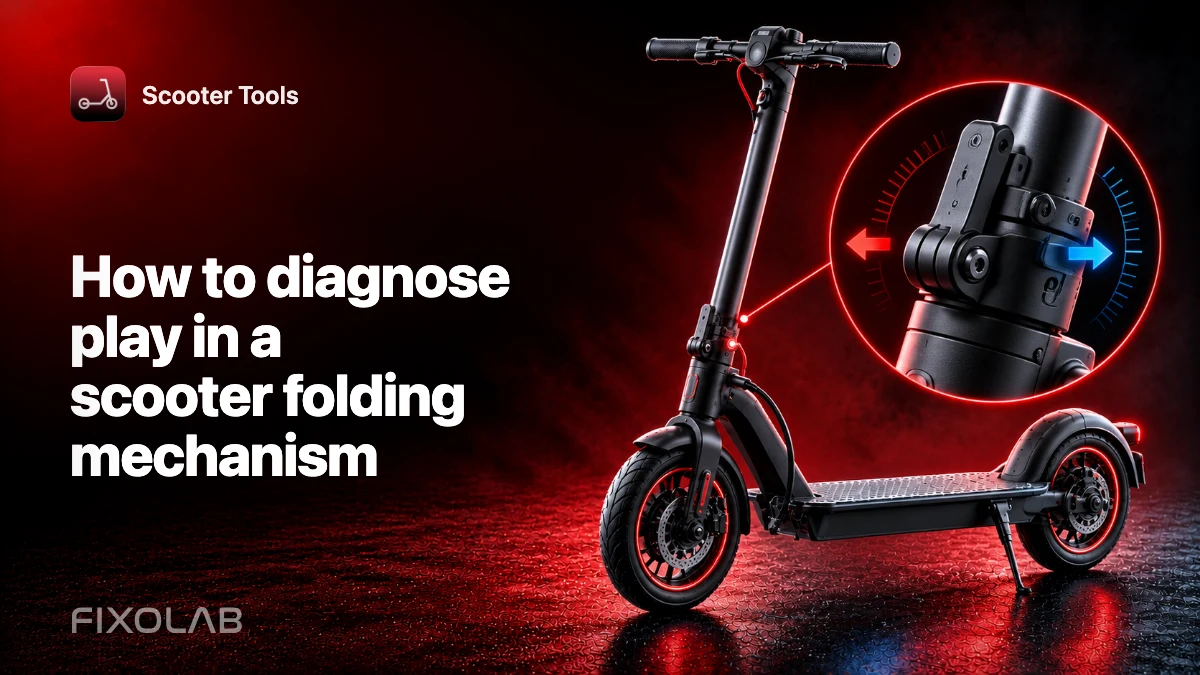
How to diagnose play in a scooter folding mechanism
Movement around the stem or folding joint can affect control. If the mechanism no longer locks as designed, stop riding until it is inspected.
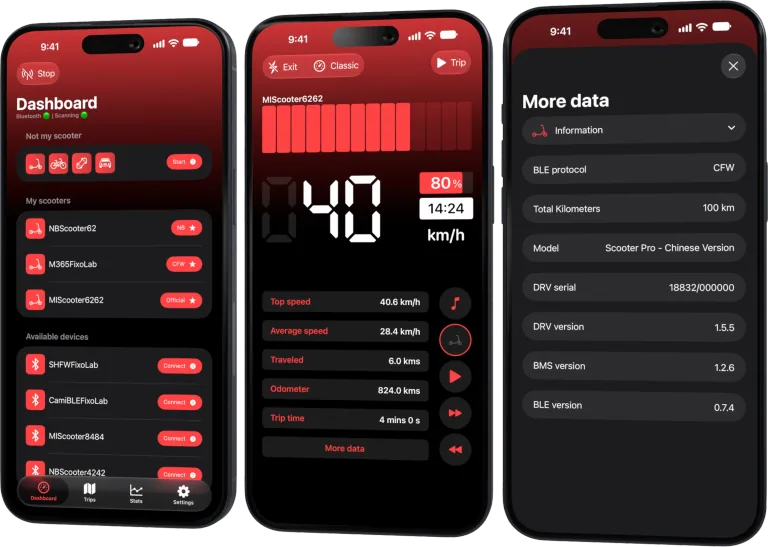
Scooter Tools can show supported local Bluetooth telemetry and trip context. It does not flash firmware, bypass ownership, certify a repair or replace the scooter manufacturer’s safety instructions.

Your Xiaomi and Ninebot scooter dashboard
Monitor speed, battery, mileage, temperature and routes in real time, with support for official and custom firmware
Available on Android, iPhone, iPad and Mac, with iCloud sync on Apple devices
Locate the movement while stationary
With the scooter powered off and supported, observe whether movement comes from the folding latch, stem bearings, handlebar clamp or another joint. Do not bounce or ride it to reproduce a severe fault.
Inspect visible approved points
Look for missing hardware, cracks, deformation, corrosion, dirt in the latch and an incomplete lock indicator. Follow only the model manual’s inspection steps.
Avoid generic tightening advice
Fasteners can require a specific sequence, torque and locking method. Overtightening can damage the mechanism or hide worn parts.
Use qualified service when uncertain
Any crack, latch that opens, repeated loosening or changed steering feel requires service. Record mileage and when the play began for the technician.
Safe review checklist
- Stop riding if lock integrity is uncertain.
- Identify the moving joint.
- Consult the exact service guidance.
- Record mileage and symptoms.
Frequently asked questions
Is a little movement always normal?
Only the manufacturer can define acceptable play for the exact mechanism.
Can Scooter Tools diagnose the hinge?
No. It can maintain mileage context, not inspect hardware.
Should thread locker be added?
Only where and how the manufacturer specifies.
Your Xiaomi and Ninebot scooter dashboard
Monitor speed, battery, mileage, temperature and routes in real time, with support for official and custom firmware
Available on Android, iPhone, iPad and Mac, with iCloud sync on Apple devices
| FixoLab
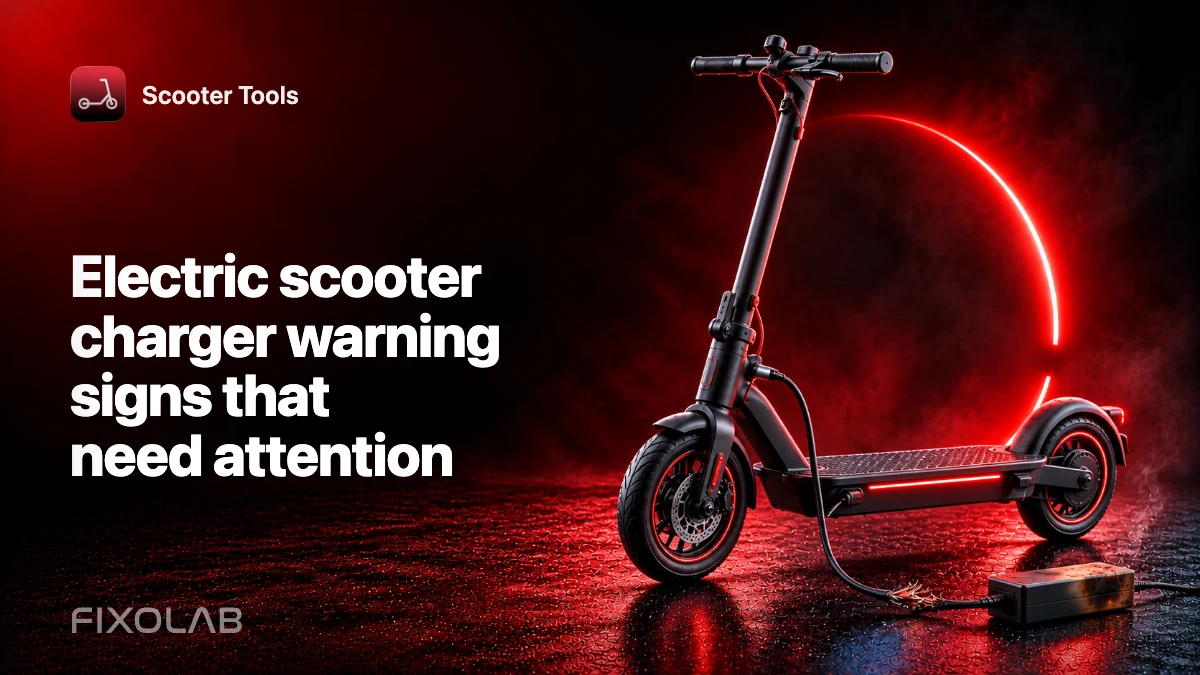
Electric scooter charger warning signs that need attention
Recognize heat, noise, odor, cable and charging behavior that should stop a charging session and trigger service.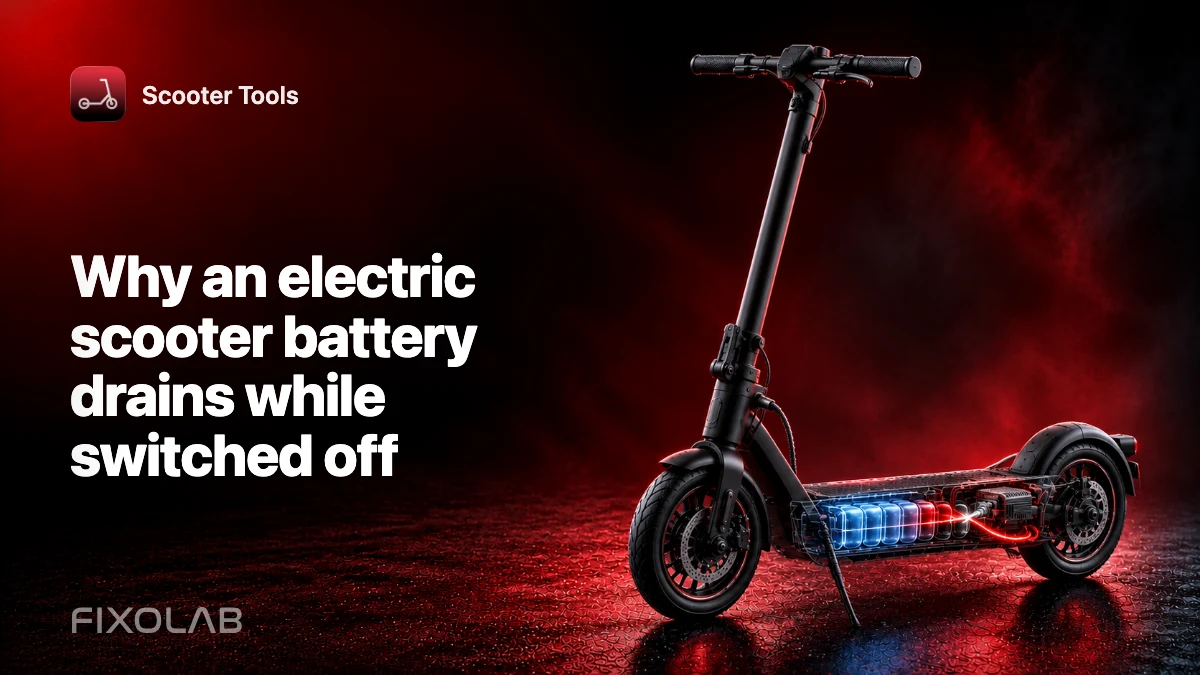
| FixoLab
Why an electric scooter battery drains while switched off
Check storage duration, standby electronics, temperature and battery condition when charge falls while the scooter is off.
| FixoLab
Why scooter battery percentage rises after stopping
Explain voltage recovery and battery estimation when the displayed charge increases after a ride or climb.
| FixoLab
What to check when an electric scooter charger is not charging
Use a safe diagnostic sequence for a scooter that will not charge without opening the battery or bypassing protection.